
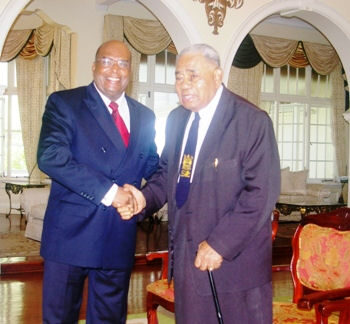
Josefa Iloilo
Josefa Iloilo was a President of Fiji from 2000 to 2009. Born December 29, 1920, in Fiji. Died February 6, 2011, in Suva. Positions held include Member of the House of Representatives of Fiji and President of Fiji (2000–2009). Awards include Member of the Order of the British Empire, companion of the Order of Fiji, general division and Order of Saint John.
Facts
13 facts · 2 confirmed by two sources · 1 cited · 10 from one source
Where this comes from
Papalocal keeps its own record. It started from these sources; what each one said is kept here as it was copied, so a change on their side never changes this page by itself. Tap one to read its version.
What Wikidata says · copied November 16, 2026 · revision 2558221770
- Described as
- President of Fiji from 2000 to 2009 (1920–2011)
- Other names
- Josefa Iloilovatu Uluivuda, Ratu Josefa Iloilo, Ratu Josefa Iloilovatu, Ratu Josefa Iloilovatu Uluivuda, Josefa Iloilovatu
- Born
- December 29, 1920 · 2 references
- Died
- February 6, 2011 · 3 references
- Born in
- Fiji
- Died in
- Suva · 1 reference
- Citizen of
- Fiji
- Occupation
- politician
- Positions held
- Member of the House of Representatives of Fiji; President of Fiji (2000–2009) · 1 reference
- Political party
- Alliance Party
- Awards
- Member of the Order of the British Empire; companion of the Order of Fiji, general division · 2 references; Order of Saint John · 1 reference
- Spouse
- Kavu Iloilo · 1 reference
- Wikipedias with a page
- 39
Wikidata item Q316317 (wikidata.org/wiki/Q316317), public domain (CC0). Copied November 16, 2026.
What Wikipedia says · copied November 16, 2026 · revision 1385796084
Ratu Josefa Iloilovatu Uluivuda, (29 December 1920 – 6 February 2011) was a Fijian politician who served as the 3rd President of Fiji from 2000 until 2009 following the 2000 Fijian coup d'état, excluding a brief period from 5 December 2006 to 4 January 2007 amid the 2006 coup d'état. He held the traditional title of Tui Vuda, the paramount chief of the Vuda district in Ba Province on Fiji's northwest coast. Like many Fijian people, he rarely used his surname and was known simply as Josefa Iloilo. He announced on 28 July 2009 that he would be leaving office on 30 July. At the age of 88, he was the world's oldest incumbent head of state.
On 5 December 2006, Commodore Frank Bainimarama, Commander of the Republic of Fiji Military Forces and former Acting President amid the 2000 coup d'état, seized power in a new coup d'état and assumed presidential powers. This followed failed attempts on Iloilo's part to mediate a solution to the long-running impasse between the military and the government of Prime Minister Laisenia Qarase. However, his powers were restored by Bainimarama on 4 January 2007. Iloilo also endorsed Bainimarama's coup on the same day, in his first public address since the coup. He appointed Bainimarama as Prime Minister the following day.
After Fiji's Court of Appeal had ruled that the removal of Prime Minister Laisenia Qarase and the appointment of Fiji's interim regime following the military coup in 2006 was unlawful, on 10 April 2009 Iloilo dismissed the judges and abrogated the country's constitution. Iloilo claimed to have the "full support" of the security forces and directed the military to take "all reasonable steps" to maintain law and order.
- Born, in its opening lines
- December 29, 1920
- Died, in its opening lines
- February 6, 2011
From the Wikipedia article “Josefa Iloilo” (en.wikipedia.org/wiki/Josefa_Iloilo), by its contributors, under CC BY-SA 4.0 (creativecommons.org/licenses/by-sa/4.0/). Copied November 16, 2026; not changed.
Confirmed Two sources agree. Cited One source, and it names where it got it. One source One source, without a reference of its own. Sources disagree The sources disagree. We show the best-supported value and keep theirs below.
