
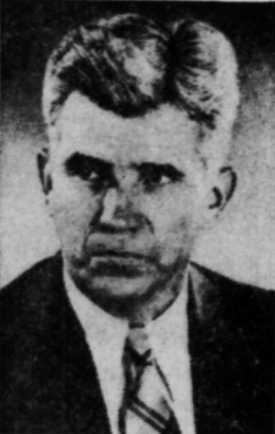
Joseph Banks Rhine
Joseph Banks Rhine was an American parapsychologist. Born September 29, 1895, in Juniata County. Died February 20, 1980, in Hillsborough. Educated at College of Wooster and Ohio Northern University.
Facts
11 facts · 2 confirmed by two sources · 2 cited · 7 from one source
Where this comes from
Papalocal keeps its own record. It started from these sources; what each one said is kept here as it was copied, so a change on their side never changes this page by itself. Tap one to read its version.
What Wikidata says · copied November 18, 2026 · revision 2533438488
- Described as
- American parapsychologist (1895-1980)
- Other names
- J. B. Rhine
- Born
- September 29, 1895 · 9 references
- Died
- February 20, 1980 · 6 references
- Born in
- Juniata County
- Died in
- Hillsborough
- Citizen of
- United States · 1 reference
- Occupation
- botanist; parapsychologist; psychologist · 1 reference
- Worked for
- Duke University
- Education
- College of Wooster; Ohio Northern University · 1 reference
- Wikipedias with a page
- 18
Wikidata item Q735788 (wikidata.org/wiki/Q735788), public domain (CC0). Copied November 18, 2026.
What Wikipedia says · copied November 18, 2026 · revision 1373556570
Joseph Banks Rhine (September 29, 1895 – February 20, 1980), usually known as J. B. Rhine, was an American botanist who founded parapsychology as a branch of psychology, founding the parapsychology lab at Duke University, the Journal of Parapsychology, the Foundation for Research on the Nature of Man, and the Parapsychological Association. Rhine wrote the books Extrasensory Perception and Parapsychology: Frontier Science of the Mind.
- Born, in its opening lines
- September 29, 1895
- Died, in its opening lines
- February 20, 1980
From the Wikipedia article “Joseph Banks Rhine” (en.wikipedia.org/wiki/Joseph_Banks_Rhine), by its contributors, under CC BY-SA 4.0 (creativecommons.org/licenses/by-sa/4.0/). Copied November 18, 2026; not changed.
Confirmed Two sources agree. Cited One source, and it names where it got it. One source One source, without a reference of its own. Sources disagree The sources disagree. We show the best-supported value and keep theirs below.
