
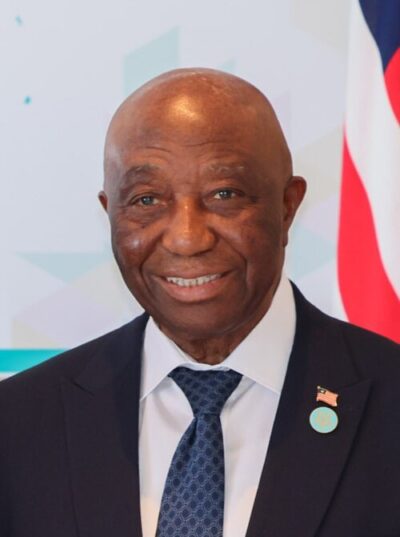
Joseph Boakai
Joseph Boakai is a Liberian politician. Born November 30, 1944, in Foya District. Positions held include Vice President of Liberia (2006–2018) and President of Liberia (2024–). Educated at College of West Africa and University of Liberia.
Facts
14 facts · 1 confirmed by two sources · 4 cited · 9 from one source
Where this comes from
Papalocal keeps its own record. It started from these sources; what each one said is kept here as it was copied, so a change on their side never changes this page by itself. Tap one to read its version.
What Wikidata says · copied November 16, 2026 · revision 2563039553
- Described as
- Liberian politician
- Other names
- Joseph Nyumah Boakai
- Born
- November 30, 1944
- Born in
- Foya District
- Citizen of
- Liberia · 1 reference
- Occupation
- politician · 1 reference; minister · 1 reference
- Positions held
- Vice President of Liberia (2006–2018); President of Liberia (2024–)
- Political party
- Unity Party
- Education
- College of West Africa; University of Liberia; Kansas State University
- Field
- agriculture
- Spouse
- Kartumu Yarta Boakai (1972–) · 1 reference
- Religion
- Baptists
- Wikipedias with a page
- 37
Wikidata item Q2630483 (wikidata.org/wiki/Q2630483), public domain (CC0). Copied November 16, 2026.
What Wikipedia says · copied November 16, 2026 · revision 1384737952
Joseph Nyuma Boakai Sr. (born 30 November 1944) is a Liberian politician who has served as the 26th president of Liberia since 2024. He previously served as the 29th vice president of Liberia from 2006 to 2018, under President Ellen Johnson Sirleaf and as the minister of agriculture from 1983 to 1985. Boakai ran for president in 2017, losing the election to George Weah. He went on to defeat Weah in the 2023 election.
- Born, in its opening lines
- November 30, 1944
From the Wikipedia article “Joseph Boakai” (en.wikipedia.org/wiki/Joseph_Boakai), by its contributors, under CC BY-SA 4.0 (creativecommons.org/licenses/by-sa/4.0/). Copied November 16, 2026; not changed.
Confirmed Two sources agree. Cited One source, and it names where it got it. One source One source, without a reference of its own. Sources disagree The sources disagree. We show the best-supported value and keep theirs below.
