
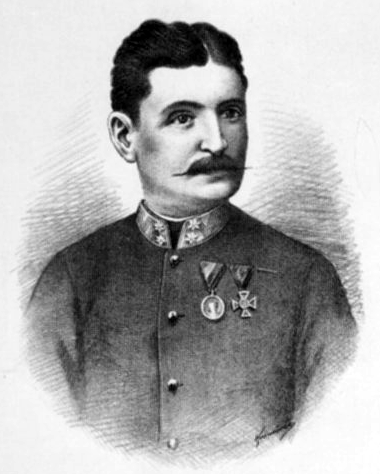
Josip Runjanin
Josip Runjanin was a Croatian composer. Born December 8, 1821, in Vinkovci. Died February 2, 1878, in Novi Sad. Positions held include representative in the Croatian Parliament. Educated at Vinkovci Gymnasium.
Facts
11 facts · 1 confirmed by two sources · 1 cited · 8 from one source · 1 where the sources disagree
What’s different
- Died: we show February 2, 1878 (Sources disagree). Wikipedia says January 20, 1878
Where this comes from
Papalocal keeps its own record. It started from these sources; what each one said is kept here as it was copied, so a change on their side never changes this page by itself. Tap one to read its version.
What Wikidata says · copied November 18, 2026 · revision 2553960372
- Described as
- Croatian composer (1821–1878)
- Born
- December 8, 1821 · 2 references
- Died
- February 2, 1878 · 2 references
- Born in
- Vinkovci
- Died in
- Novi Sad
- Buried in
- Twenty-four tombstones with burial places of prominent political, cultural and public workers in Novi Sad
- Citizen of
- Austrian Empire; Hungary
- Occupation
- soldier; composer
- Positions held
- representative in the Croatian Parliament
- Education
- Vinkovci Gymnasium · 1 reference
- Wikipedias with a page
- 22
Wikidata item Q1265421 (wikidata.org/wiki/Q1265421), public domain (CC0). Copied November 18, 2026.
What Wikipedia says · copied November 18, 2026 · revision 1380010272
Josip Runjanin (8 December 1821 – 20 January 1878), born Josif Runjanin (Serbian Cyrillic: Јосиф Руњанин), was an Austrian career military officer, politician and composer of Serb origin best known for composing the melody of the Croatian national anthem, Lijepa naša domovino ("Our Beautiful Homeland"), in 1846.
Runjanin received his education in Vinkovci and later in Sremski Karlovci, then Slavonian Military Frontier. As a young man, he served in the Imperial Austrian Army as a cadet in the town of Glina, along the Military Frontier with the Ottoman Empire. While serving in Glina, Runjanin attained the rank of captain and became proficient in playing the piano. He is known to have composed only a handful of works, most famously the musical accompaniment to Antun Mihanović's patriotic poem Horvatska domovina ("Croatian Homeland"). The piece, under the title Lijepa naša domovino, was selected by popular acclaim as the anthem of the Croatian people at an economic exhibition in Zagreb in 1891. One of its stanzas was eventually integrated into the national anthem of the Kingdom of Serbs, Croats and Slovenes, and the piece later served as the national anthem of several Croatian polities, including that of modern-day Croatia.
A veteran of the Second and Third Italian War of Independence, Runjanin ultimately attained the rank of colonel, and served for two years in the Croatian Parliament beginning in 1865. Following his retirement from military service in 1876, he relocated to Novi Sad, where he died, penniless, two years later at the age of 56. Several schools in Croatia bear his name, including the Elementary Music School of Josip Runjanin in Vinkovci.
- Born, in its opening lines
- December 8, 1821
- Died, in its opening lines
- January 20, 1878
From the Wikipedia article “Josip Runjanin” (en.wikipedia.org/wiki/Josip_Runjanin), by its contributors, under CC BY-SA 4.0 (creativecommons.org/licenses/by-sa/4.0/). Copied November 18, 2026; not changed.
Confirmed Two sources agree. Cited One source, and it names where it got it. One source One source, without a reference of its own. Sources disagree The sources disagree. We show the best-supported value and keep theirs below.
