
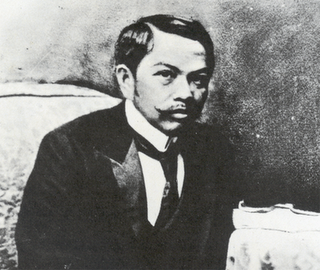
Juan Luna
Juan Luna was a Filipino painter, sculptor and political activist. Born October 25, 1857, in Badoc. Died December 7, 1899, in Hong Kong. Known for Spoliarium, Chula series and Ecce Homo. Educated at Ateneo de Manila University and Royal Academy of Fine Arts of San Fernando.
Facts
23 facts · 2 confirmed by two sources · 3 cited · 18 from one source
Where this comes from
Papalocal keeps its own record. It started from these sources; what each one said is kept here as it was copied, so a change on their side never changes this page by itself. Tap one to read its version.
What Wikidata says · copied November 17, 2026 · revision 2568886787
- Described as
- Filipino painter, sculptor and political activist (1857-1899)
- Other names
- Juan Luna Novicio, Juan Luna y Novicio
- Born
- October 25, 1857 · 1 reference
- Died
- December 7, 1899 · 2 references
- Born in
- Badoc
- Died in
- Hong Kong · 1 reference
- Buried in
- San Agustin Church
- Cause of death
- disease
- Citizen of
- Philippines
- Occupation
- painter · 2 references; autobiographer; sculptor · 2 references
- Education
- Ateneo de Manila University; Royal Academy of Fine Arts of San Fernando · 1 reference; Philippine Merchant Marine Academy
- Genre
- portrait painting; history painting
- Known for
- Spoliarium; Chula series; Ecce Homo; The Parisian Life; Hymen, oh Hyménée!
- Field
- painting · 1 reference
- Children
- Andres Luna de San Pedro
- Siblings
- Antonio Luna
- Wikipedias with a page
- 27
Wikidata item Q28867 (wikidata.org/wiki/Q28867), public domain (CC0). Copied November 17, 2026.
What Wikipedia says · copied November 17, 2026 · revision 1384031448
Juan Luna de San Pedro y Novicio (Spanish: [ˈxwan ˈluna], Tagalog: [hwɐn ˈluna]; October 25, 1857 – December 7, 1899) was a Filipino painter, sculptor and a political activist of the Philippine Revolution during the late 19th century. He became one of the first recognized Philippine artists.
His winning of the gold medal in the 1884 Madrid Exposition of Fine Arts, along with the silver win of fellow Filipino painter Félix Resurrección Hidalgo, prompted a celebration which was a significant highlight in the memoirs of members of the Propaganda Movement, with the fellow Ilustrados toasting the two painters' good health and the brotherhood between Spain and the Philippines.
Well regarded for work done in the manner of European academies of his time, Luna painted literary and historical scenes, some with an underscore of political commentary. His allegorical works were inspired by classical balance, and often showed figures in theatrical poses.
- Born, in its opening lines
- October 25, 1857
- Died, in its opening lines
- December 7, 1899
From the Wikipedia article “Juan Luna” (en.wikipedia.org/wiki/Juan_Luna), by its contributors, under CC BY-SA 4.0 (creativecommons.org/licenses/by-sa/4.0/). Copied November 17, 2026; not changed.
Confirmed Two sources agree. Cited One source, and it names where it got it. One source One source, without a reference of its own. Sources disagree The sources disagree. We show the best-supported value and keep theirs below.
