
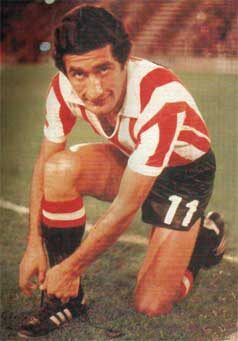
Juan Ramón Verón was an Argentine footballer. Born March 17, 1944, in La Plata. Died May 27, 2025, in La Plata. Teams include Junior de Barranquilla (1976–1977), Cúcuta Deportivo (1978–1979) and Estudiantes de La Plata (3 times) (1962–1981).
Facts
16 facts · 2 confirmed by two sources · 0 cited · 14 from one source
Where this comes from
Papalocal keeps its own record. It started from these sources; what each one said is kept here as it was copied, so a change on their side never changes this page by itself. Tap one to read its version.
What Wikidata says · copied November 18, 2026 · revision 2569848755
- Described as
- Argentine footballer
- Other names
- Juan Ramon Veron
- Born
- March 17, 1944 · 2 references
- Died
- May 27, 2025 · 1 reference
- Born in
- La Plata
- Died in
- La Plata
- Citizen of
- Argentina
- Occupation
- association football player; association football coach
- Teams
- Junior de Barranquilla (1976–1977); Cúcuta Deportivo (1978–1979); Estudiantes de La Plata (3 times) (1962–1981); Panathinaikos F.C. (1972–1975); Argentina national football team (1968–1971)
- Sport
- association football
- Children
- Iani Verón; Juan Sebastián Verón
- Height
- 1.75 m (5 ft 9 in)
- Wikipedias with a page
- 21
Wikidata item Q1389230 (wikidata.org/wiki/Q1389230), public domain (CC0). Copied November 18, 2026.
What Wikipedia says · copied November 18, 2026 · revision 1385420415
Juan Ramón Verón (Spanish pronunciation: [ˈxwan raˈmom beˈɾon]; 17 March 1944 – 27 May 2025) was an Argentine footballer. He played as a midfielder or forward most notably for Estudiantes, where he won three consecutive Copa Libertadores titles. He was the father of former player Juan Sebastián Verón.
- Born, in its opening lines
- March 17, 1944
- Died, in its opening lines
- May 27, 2025
From the Wikipedia article “Juan Ramón Verón” (en.wikipedia.org/wiki/Juan_Ramón_Verón), by its contributors, under CC BY-SA 4.0 (creativecommons.org/licenses/by-sa/4.0/). Copied November 18, 2026; not changed.
Confirmed Two sources agree. Cited One source, and it names where it got it. One source One source, without a reference of its own. Sources disagree The sources disagree. We show the best-supported value and keep theirs below.
