
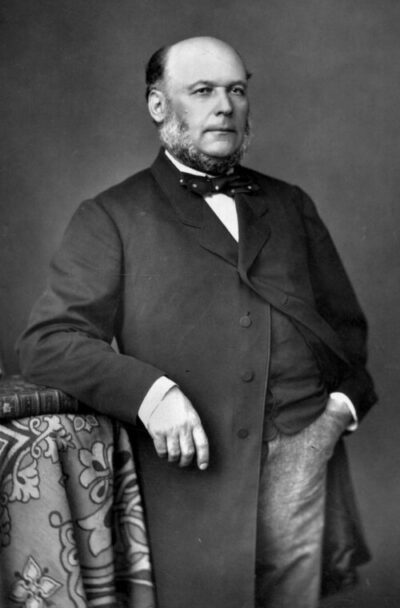
Jules Grévy
Jules Grévy was a French statesman and lawyer. Born August 15, 1807, in Mont-sous-Vaudrey. Died September 9, 1891, in Mont-sous-Vaudrey. Positions held include President of the French Republic (1879–1887), Member of the 1848 Constituent Assembly (1848–1849) and French co-prince of Andorra (1879–1887). Educated at Paris Law Faculty. Awards include Knight of the Order of the Golden Fleece, Grand Cross of the Legion of Honour and Grand Master of the Legion of Honour.
Facts
30 facts · 2 confirmed by two sources · 9 cited · 19 from one source
Where this comes from
Papalocal keeps its own record. It started from these sources; what each one said is kept here as it was copied, so a change on their side never changes this page by itself. Tap one to read its version.
What Wikidata says · copied November 16, 2026 · revision 2563060482
- Described as
- French statesman and lawyer (1807–1891)
- Other names
- François Paul Jules Grévy, Jules Grevy
- Born
- August 15, 1807 · 9 references
- Died
- September 9, 1891 · 8 references
- Born in
- Mont-sous-Vaudrey · 1 reference
- Died in
- Mont-sous-Vaudrey · 1 reference
- Buried in
- Mausolée de la famille Grévy
- Cause of death
- engorgement · 1 reference
- Citizen of
- France
- Occupation
- statesperson · 1 reference; lawyer; politician · 2 references; official
- Positions held
- President of the French Republic (1879–1887); Member of the 1848 Constituent Assembly (1848–1849) · 1 reference; French co-prince of Andorra (1879–1887); bâtonnier (1868–1870); Prefect of Jura (1848); Deputy of the French Second Republic (1849–1851) · 1 reference; Deputy of the Corps législatif (1868–1870) · 1 reference; member of the National Assembly (1871–1876) · 1 reference; Deputy of the French Third Republic (1876–1879) · 1 reference
- Political party
- Republican Left
- Education
- Paris Law Faculty
- Awards
- Knight of the Order of the Golden Fleece; Grand Cross of the Legion of Honour; Grand Master of the Legion of Honour; Royal Order of the Seraphim
- Spouse
- Coralie Grévy (1848–)
- Children
- Daniel Wilson · 1 reference
- Siblings
- Albert Grévy; Paul Grévy
- Wikipedias with a page
- 60
Wikidata item Q296083 (wikidata.org/wiki/Q296083), public domain (CC0). Copied November 16, 2026.
What Wikipedia says · copied November 16, 2026 · revision 1383928508
François Judith Paul Grévy (15 August 1807 – 9 September 1891), known as Jules Grévy (French: [ʒyl ɡʁevi]), was a French lawyer and politician who served as President of France from 1879 to 1887. He was a leader of the Moderate Republicans, and given that his predecessors were monarchists who tried without success to restore the French monarchy, Grévy is considered the first real republican president of France. During Grévy's presidency from 1879 to 1887, according to David Bell, there was a disunity among his cabinets. Only one survived more than a year. Grévy paid attention chiefly to defense, internal order, and foreign relations. Critics argue that Grévy's confusing approach to appointments set a bad precedent for handling crises.
Born in a small town in the Jura department, Grévy moved to Paris where he initially followed a career in law before becoming a republican activist. He began his political career after the French Revolution of 1848, as a member of the National Assembly of the French Second Republic, where he became known for his opposition to Louis-Napoléon Bonaparte and as a supporter of lesser authority for the executive branch. During the 1851 coup d'état by Louis-Napoléon he was briefly imprisoned, and afterwards retired from political life.
With the downfall of the Second French Empire and the reestablishment of the Republic in 1870, Grévy returned to prominence in national politics. After occupying high offices in the National Assembly and the Chamber of Deputies, he was elected president of France in 1879. During his presidency Grévy confirmed his longtime stance by diminishing his own executive authority in favor of the Parliament, and in foreign policy strove for peaceful relations and opposed colonialism. He was reelected in 1885, but two years later Grévy's son-in-law was implicated in a corruption scandal and Grévy had to resign after exhausting the pool of willing politicians to form a fresh government. His nearly nine years as president of France are seen as the consolidation of the French Third Republic.
- Born, in its opening lines
- August 15, 1807
- Died, in its opening lines
- September 9, 1891
From the Wikipedia article “Jules Grévy” (en.wikipedia.org/wiki/Jules_Grévy), by its contributors, under CC BY-SA 4.0 (creativecommons.org/licenses/by-sa/4.0/). Copied November 16, 2026; not changed.
Confirmed Two sources agree. Cited One source, and it names where it got it. One source One source, without a reference of its own. Sources disagree The sources disagree. We show the best-supported value and keep theirs below.
