
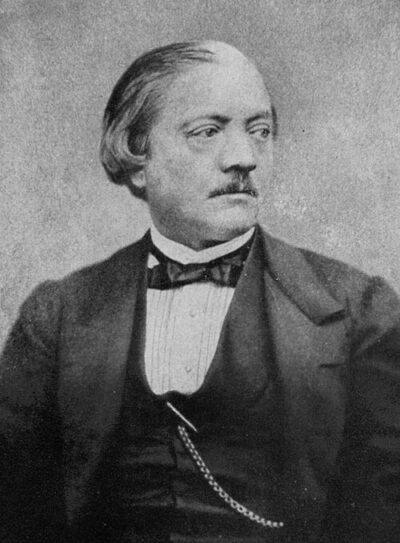
Jules Perrot
Jules Perrot was a French ballet dancer and choreographer. Born August 18, 1810, in Lyon. Died August 19, 1892, in Paramé.
Facts
17 facts · 1 confirmed by two sources · 8 cited · 7 from one source · 1 where the sources disagree
What’s different
- Died: we show August 19, 1892 (Sources disagree). Wikipedia says August 29, 1892
Where this comes from
Papalocal keeps its own record. It started from these sources; what each one said is kept here as it was copied, so a change on their side never changes this page by itself. Tap one to read its version.
What Wikidata says · copied November 17, 2026 · revision 2568115635
- Described as
- French ballet dancer and choreographer (1810–1892)
- Other names
- Jules-Joseph Perrot
- Born
- August 18, 1810 · 7 references
- Died
- August 19, 1892 · 1 reference
- Born in
- Lyon · 1 reference
- Died in
- Paramé · 1 reference
- Buried in
- Père Lachaise Cemetery
- Citizen of
- France
- Occupation
- ballet dancer; choreographer · 2 references; dancer · 1 reference; librettist; ballet master · 1 reference; dance teacher · 1 reference; composer · 1 reference; Theaterintendant · 1 reference
- Worked for
- La Scala; Paris Opera; Bolshoi Kamenny Theatre
- Wikipedias with a page
- 24
Wikidata item Q554284 (wikidata.org/wiki/Q554284), public domain (CC0). Copied November 17, 2026.
What Wikipedia says · copied November 17, 2026 · revision 1371475976
Jules-Joseph Perrot (English: peh-ROH, French: [ʒyl ʒozɛf pɛʁo]; 18 August 1810 – 29 August 1892) was a French dancer and choreographer who later became Ballet Master of the Imperial Ballet in St. Petersburg, Russia. He created some of the most famous ballets of the 19th century including Pas de Quatre, La Esmeralda, Ondine, and Giselle with Jean Coralli.
- Born, in its opening lines
- August 18, 1810
- Died, in its opening lines
- August 29, 1892
From the Wikipedia article “Jules Perrot” (en.wikipedia.org/wiki/Jules_Perrot), by its contributors, under CC BY-SA 4.0 (creativecommons.org/licenses/by-sa/4.0/). Copied November 17, 2026; not changed.
Confirmed Two sources agree. Cited One source, and it names where it got it. One source One source, without a reference of its own. Sources disagree The sources disagree. We show the best-supported value and keep theirs below.
