
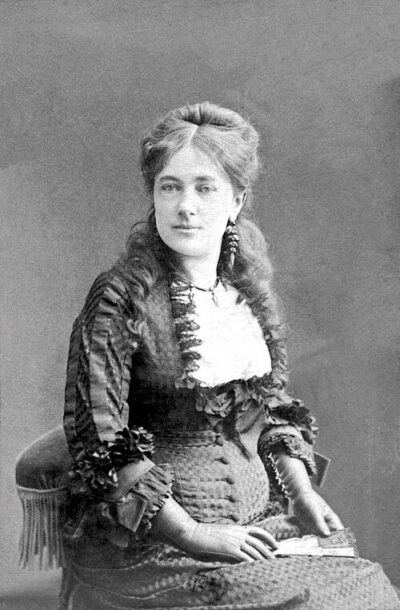
Juliette Adam
Juliette Adam was a French writer and salonnière. Born October 4, 1836, in Verberie. Died August 23, 1936, in Callian. Awards include Prix Auguste-Furtado, Prix Jules-Favre and Prix d'Académie.
Facts
23 facts · 2 confirmed by two sources · 8 cited · 13 from one source
Where this comes from
Papalocal keeps its own record. It started from these sources; what each one said is kept here as it was copied, so a change on their side never changes this page by itself. Tap one to read its version.
What Wikidata says · copied November 16, 2026 · revision 2568745520
- Described as
- French writer and salonnière (1836–1936)
- Other names
- Juliette Lamber, Juliette Lambert
- Born
- October 4, 1836 · 7 references
- Died
- August 23, 1936 · 3 references
- Born in
- Verberie · 1 reference
- Died in
- Callian · 1 reference
- Buried in
- Père Lachaise Cemetery · 2 references
- Name at birth
- Juliette Lambert
- Citizen of
- France · 1 reference
- Occupation
- writer · 4 references; salonnière; novelist; memoirist; essayist; poet; editor · 1 reference
- Member of
- Ligue de la Patrie Française; Paul Vasili
- Awards
- Prix Auguste-Furtado (1920); Prix Jules-Favre (1917); Prix d'Académie (1927)
- Field
- essay
- Spouse
- Edmond Adam (1868–1877) · 1 reference; Alexis La Messine (1852–1867) · 1 reference
- Religion
- Catholicism (1905–) · 1 reference
- Wikipedias with a page
- 33
Wikidata item Q270617 (wikidata.org/wiki/Q270617), public domain (CC0). Copied November 16, 2026.
What Wikipedia says · copied November 16, 2026 · revision 1371869349
Juliette Adam (French pronunciation: [ʒyljɛt adɑ̃] ; née Lambert; 4 October 1836 – 23 August 1936) was a French author and feminist.
- Born, in its opening lines
- October 4, 1836
- Died, in its opening lines
- August 23, 1936
From the Wikipedia article “Juliette Adam” (en.wikipedia.org/wiki/Juliette_Adam), by its contributors, under CC BY-SA 4.0 (creativecommons.org/licenses/by-sa/4.0/). Copied November 16, 2026; not changed.
Confirmed Two sources agree. Cited One source, and it names where it got it. One source One source, without a reference of its own. Sources disagree The sources disagree. We show the best-supported value and keep theirs below.
