
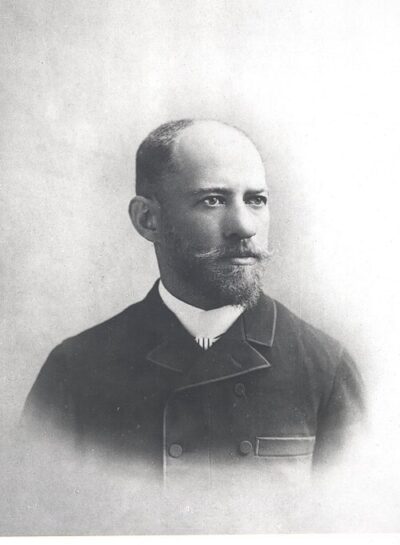
Julius Popper
Julius Popper was a Romanian-Argentinian explorer and mercenary, accused of genocide. Born December 15, 1857, in Bucharest. Died June 6, 1893, in Buenos Aires.
Facts
12 facts · 1 confirmed by two sources · 4 cited · 6 from one source · 1 where the sources disagree
What’s different
- Died: we show June 6, 1893 (Sources disagree). Wikipedia says June 5, 1893
Where this comes from
Papalocal keeps its own record. It started from these sources; what each one said is kept here as it was copied, so a change on their side never changes this page by itself. Tap one to read its version.
What Wikidata says · copied November 18, 2026 · revision 2555053403
- Described as
- Romanian-Argentinian explorer and mercenary, accused of genocide (1857-1893)
- Born
- December 15, 1857 · 2 references
- Died
- June 6, 1893 · 1 reference
- Born in
- Bucharest · 1 reference
- Died in
- Buenos Aires · 1 reference
- Citizen of
- Romania; Ottoman Empire · 1 reference; Argentina · 1 reference
- Occupation
- engineer · 1 reference; explorer · 1 reference; urban planner; geographer · 1 reference; photographer
- Wikipedias with a page
- 22
Wikidata item Q961981 (wikidata.org/wiki/Q961981), public domain (CC0). Copied November 18, 2026.
What Wikipedia says · copied November 18, 2026 · revision 1372705083
Julius Popper (December 15, 1857 – June 5, 1893; known in Spanish as Julio Popper (Spanish pronunciation: [ˈxuljo poˈpeɾ])), a Romanian-born Argentine colonial engineer and explorer, known as a modern "conquistador" of Tierra del Fuego in southern South America, became both a controversial and influential figure as one of the main perpetrators of the genocide of the native Selkʼnam people in the Tierra del Fuego archipelago,
and the circumstances surrounding his own death remain a mystery.
- Born, in its opening lines
- December 15, 1857
- Died, in its opening lines
- June 5, 1893
From the Wikipedia article “Julius Popper” (en.wikipedia.org/wiki/Julius_Popper), by its contributors, under CC BY-SA 4.0 (creativecommons.org/licenses/by-sa/4.0/). Copied November 18, 2026; not changed.
Confirmed Two sources agree. Cited One source, and it names where it got it. One source One source, without a reference of its own. Sources disagree The sources disagree. We show the best-supported value and keep theirs below.
