
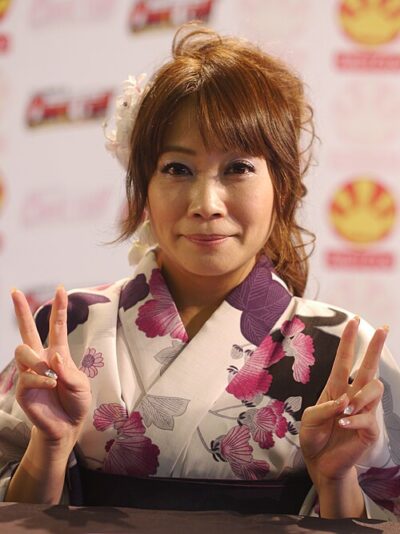
Junko Takeuchi
Junko Takeuchi is a Japanese actress and voice actress. Born April 5, 1972, in Saitama Prefecture. Awards include Seiyu Awards Kids/Family Award.
Facts
8 facts · 1 confirmed by two sources · 2 cited · 5 from one source
Where this comes from
Papalocal keeps its own record. It started from these sources; what each one said is kept here as it was copied, so a change on their side never changes this page by itself. Tap one to read its version.
What Wikidata says · copied November 17, 2026 · revision 2546525138
- Described as
- Japanese actress and voice actress
- Other names
- Takeuchi Junko
- Born
- April 5, 1972 · 1 reference
- Born in
- Saitama Prefecture
- Citizen of
- Japan
- Occupation
- seiyū; actor
- Awards
- Seiyu Awards Kids/Family Award (2011) · 1 reference
- Field
- voice acting
- Height
- 1.51 m (4 ft 11 in) (1998) · 1 reference
- Wikipedias with a page
- 25
Wikidata item Q242493 (wikidata.org/wiki/Q242493), public domain (CC0). Copied November 17, 2026.
What Wikipedia says · copied November 17, 2026 · revision 1381803368
Junko Takeuchi (竹内 順子, Takeuchi Junko; born April 5, 1972) is a Japanese actress and voice actress employed by Ogipro The Next. Taking a well-trod path by many voice actresses, she often voices young male characters, with generally very quirky and goofy personalities. One of her most well-known roles includes Naruto Uzumaki in the popular anime series Naruto. She has played Takuya Kanbara in Digimon Frontier, Rin Natsuki/Cure Rouge in Yes! PreCure 5, Metabee in Medabots, Mamoru Endō in Inazuma Eleven and Inazuma Eleven GO, Gon Freecss in the 1999 version of Hunter × Hunter, MrBeast in the Japanese dub of MrBeast, and GingerBrave in the Japanese dub of Cookie Run: Kingdom.
- Born, in its opening lines
- April 5, 1972
From the Wikipedia article “Junko Takeuchi” (en.wikipedia.org/wiki/Junko_Takeuchi), by its contributors, under CC BY-SA 4.0 (creativecommons.org/licenses/by-sa/4.0/). Copied November 17, 2026; not changed.
Confirmed Two sources agree. Cited One source, and it names where it got it. One source One source, without a reference of its own. Sources disagree The sources disagree. We show the best-supported value and keep theirs below.
