
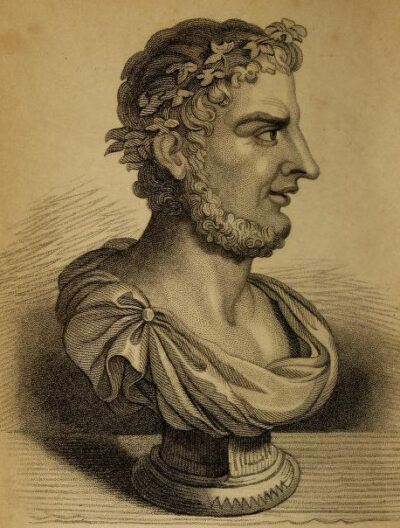
Juvenal
Juvenal was an early 2nd century Roman poet. Born 55, in Aquino. Died 2nd century, in Rome. Known for Satires.
Facts
10 facts · 0 confirmed by two sources · 2 cited · 7 from one source · 1 where the sources disagree
What’s different
- Died in: we show Rome (Sources disagree). Wikidata also lists Roman Egypt
Where this comes from
Papalocal keeps its own record. It started from these sources; what each one said is kept here as it was copied, so a change on their side never changes this page by itself. Tap one to read its version.
What Wikidata says · copied November 16, 2026 · revision 2567795053
- Described as
- early 2nd century Roman poet
- Other names
- Decimus Iunius Iuvenalis, Decimus Junius Juvenalis
- Born
- 55
- Died
- 2nd century
- Born in
- Aquino · 1 reference
- Died in
- Rome; Roman Egypt
- Citizen of
- Ancient Rome
- Occupation
- poet; writer · 3 references; historian; satirist · 2 references
- Known for
- Satires
- Wikipedias with a page
- 100
Wikidata item Q193800 (wikidata.org/wiki/Q193800), public domain (CC0). Copied November 16, 2026.
What Wikipedia says · copied November 16, 2026 · revision 1385556181
Decimus Junius Juvenalis (Latin: [ˈdɛkɪmʊs ˈjuːniʊs jʊwɛˈnaːlɪs]), known in English as Juvenal ( JOO-vən-əl; c. AD 55–128), was a Roman poet. He is the author of the Satires, a collection of satirical poems. The details of Juvenal's life are unclear, but references in his works to people from the late first and early second centuries suggest that he began writing no earlier than that time. One recent scholar argues that his first book was published in 100 or 101. A reference to a political figure dates his fifth and final surviving book to sometime after 127.
Juvenal wrote at least 16 poems in the verse form dactylic hexameter. These poems cover a range of Roman topics. This follows Lucilius—the originator of the Roman satire genre, and it fits within a poetic tradition that also includes Horace and Persius. The Satires are a vital source for the study of ancient Rome from a number of perspectives, although their comic mode of expression makes it problematic to accept the content as strictly factual. At first glance the Satires could be read as a critique of Rome.
From the Wikipedia article “Juvenal” (en.wikipedia.org/wiki/Juvenal), by its contributors, under CC BY-SA 4.0 (creativecommons.org/licenses/by-sa/4.0/). Copied November 16, 2026; not changed.
Confirmed Two sources agree. Cited One source, and it names where it got it. One source One source, without a reference of its own. Sources disagree The sources disagree. We show the best-supported value and keep theirs below.
