
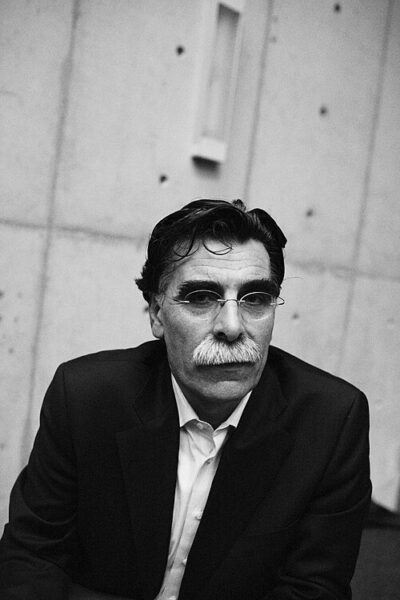
Kader Abdolah
Kader Abdolah is an Iranian-Dutch columnist, poet, writer. Born December 12, 1954, in Arak. Known for The House of the Mosque. Educated at Delft University of Technology. Awards include Gouden Ezelsoor, Charlotte Köhler Stipendium and Edgar du Perron Prize.
Facts
15 facts · 0 confirmed by two sources · 5 cited · 10 from one source
Where this comes from
Papalocal keeps its own record. It started from these sources; what each one said is kept here as it was copied, so a change on their side never changes this page by itself. Tap one to read its version.
What Wikidata says · copied November 16, 2026 · revision 2563185958
- Described as
- Iranian-Dutch columnist, poet, writer
- Other names
- Hossein Sadjadi Ghaemmaghami Farahani, Qadir Abdullah
- Born
- December 12, 1954 · 2 references
- Born in
- Arak · 1 reference
- Citizen of
- Pahlavi Iran (1954–1979); Iran (1979–); Kingdom of the Netherlands
- Occupation
- writer; columnist; poet; novelist
- Education
- Delft University of Technology · 1 reference
- Known for
- The House of the Mosque
- Awards
- Gouden Ezelsoor (1994); Charlotte Köhler Stipendium (1995) · 1 reference; Edgar du Perron Prize (2000) · 1 reference; Charlotte Köhler Prize for literature (1995) · 1 reference
- Wikipedias with a page
- 34
Wikidata item Q381254 (wikidata.org/wiki/Q381254), public domain (CC0). Copied November 16, 2026.
What Wikipedia says · copied November 16, 2026 · revision 1384044353
Hossein Sadjadi Ghaemmaghami Farahani (Persian: حسین سجادی قائممقامی فراهانی), better known by his pen name Kader Abdolah (Persian: قادر عبدالله) (Arak, 12 November 1954), is an Iranian-Dutch writer, poet and columnist. His books, written in Dutch, often contain Persian literary themes. He regularly appears on Dutch television as well.
From the Wikipedia article “Kader Abdolah” (en.wikipedia.org/wiki/Kader_Abdolah), by its contributors, under CC BY-SA 4.0 (creativecommons.org/licenses/by-sa/4.0/). Copied November 16, 2026; not changed.
Confirmed Two sources agree. Cited One source, and it names where it got it. One source One source, without a reference of its own. Sources disagree The sources disagree. We show the best-supported value and keep theirs below.
