
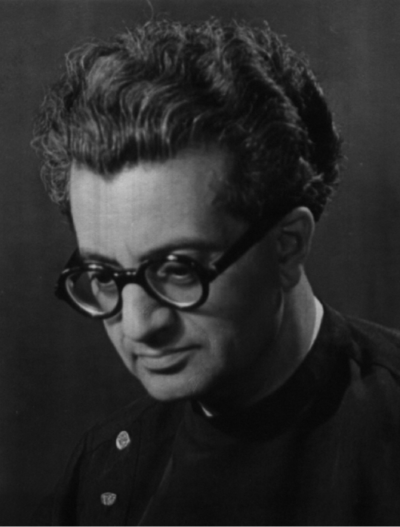
Kaikhosru Shapurji Sorabji
Kaikhosru Shapurji Sorabji was an English composer, music critic, pianist and writer. Born August 14, 1892, in Chingford. Died October 15, 1988, in Winfrith Newburgh.
Facts
14 facts · 2 confirmed by two sources · 9 cited · 3 from one source
Where this comes from
Papalocal keeps its own record. It started from these sources; what each one said is kept here as it was copied, so a change on their side never changes this page by itself. Tap one to read its version.
What Wikidata says · copied November 16, 2026 · revision 2551354656
- Described as
- English composer, music critic, pianist and writer (1892–1988)
- Other names
- Leon Dudley Sorabji
- Born
- August 14, 1892 · 5 references
- Died
- October 15, 1988 · 3 references
- Born in
- Chingford · 1 reference
- Died in
- Winfrith Newburgh · 2 references
- Buried in
- Corfe Castle · 1 reference
- Name at birth
- Leon Dudley Sorabji · 1 reference
- Citizen of
- United Kingdom
- Occupation
- pianist · 1 reference; composer · 2 references; music critic · 1 reference; writer
- Instrument
- piano · 1 reference
- Field
- piano performance · 1 reference
- Mother
- Madeline Matilda Worthy
- Wikipedias with a page
- 33
Wikidata item Q527936 (wikidata.org/wiki/Q527936), public domain (CC0). Copied November 16, 2026.
What Wikipedia says · copied November 16, 2026 · revision 1370134129
Kaikhosru Shapurji Sorabji (born Leon Dudley Sorabji; 14 August 1892 – 15 October 1988) was an English composer, music critic, pianist and writer. His music, written over a period of seventy years, ranges from sets of miniatures to works lasting several hours. One of the most prolific 20th-century composers, he is best known for his piano pieces, notably nocturnes such as Gulistān and Villa Tasca, and large-scale, technically intricate compositions, which include seven symphonies for piano solo, four toccatas, Sequentia cyclica and 100 Transcendental Studies. He felt alienated from English society by reason of his homosexuality and mixed ancestry, and had a lifelong tendency to seclusion.
Sorabji's mother was English and his father a Parsi businessman and industrialist from India, who set up a trust fund that freed his family from the need to work. Although Sorabji was a reluctant performer and not a virtuoso, he played some of his music publicly between 1920 and 1936. In the late 1930s, his attitude shifted and he imposed restrictions on performance of his works, which he lifted in 1976. His compositions received little exposure in those years and he remained in public view mainly through his writings, which include the books Around Music and Mi contra fa: The Immoralisings of a Machiavellian Musician. During this time, he also left London and eventually settled in the village of Corfe Castle, Dorset. Information on Sorabji's life, especially his later years, is scarce, with most of it coming from the letters he exchanged with his friends.
As a composer, Sorabji was largely self-taught. Although he was attracted to modernist aesthetics at first, he later dismissed much of the established and contemporary repertoire. He drew on such diverse influences as Ferruccio Busoni, Claude Debussy and Karol Szymanowski and developed a style blending baroque forms with frequent polyrhythms, interplay of tonal and atonal elements and lavish ornamentation. Though he composed mostly for the piano and has been likened to the composer-pianists he admired, including Franz Liszt and Charles-Valentin Alkan, he also wrote orchestral, chamber and organ pieces. His harmonic language and complex rhythms anticipated works from the mid-20th century onwards, and while his music remained largely unpublished until the early 2000s, interest in it has grown since then.
- Born, in its opening lines
- August 14, 1892
- Died, in its opening lines
- October 15, 1988
From the Wikipedia article “Kaikhosru Shapurji Sorabji” (en.wikipedia.org/wiki/Kaikhosru_Shapurji_Sorabji), by its contributors, under CC BY-SA 4.0 (creativecommons.org/licenses/by-sa/4.0/). Copied November 16, 2026; not changed.
Confirmed Two sources agree. Cited One source, and it names where it got it. One source One source, without a reference of its own. Sources disagree The sources disagree. We show the best-supported value and keep theirs below.
