
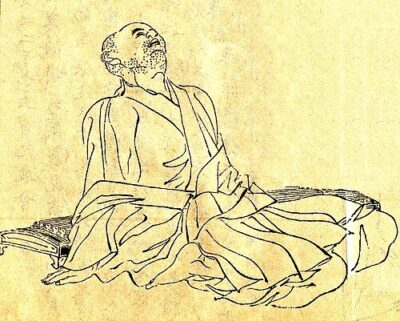
Kamo no Chōmei
Kamo no Chōmei was a Japanese poet. Born 1155, in Heian-kyō. Died 1216, in Heian-kyō. Known for Hōjōki, Mumyōshō and Hosshinshū.
Facts
14 facts · 2 confirmed by two sources · 2 cited · 9 from one source · 1 where the sources disagree
What’s different
- Died in: we show Heian-kyō (Sources disagree). Wikidata also lists Toyama
Where this comes from
Papalocal keeps its own record. It started from these sources; what each one said is kept here as it was copied, so a change on their side never changes this page by itself. Tap one to read its version.
What Wikidata says · copied November 16, 2026 · revision 2554112184
- Described as
- Japanese poet
- Other names
- Kamo no Chomei, Kamo no Choumei, Kamo no Nagaakira
- Born
- 1155 · 4 references
- Died
- 1216 · 5 references
- Born in
- Heian-kyō · 1 reference
- Died in
- Toyama · 1 reference; Heian-kyō · 2 references
- Citizen of
- Japan
- Occupation
- waka poet; essayist; lutenist; kannushi; literary scholar · 1 reference
- Known for
- Hōjōki; Mumyōshō; Hosshinshū
- Religion
- Buddhism
- Wikipedias with a page
- 30
Wikidata item Q291329 (wikidata.org/wiki/Q291329), public domain (CC0). Copied November 16, 2026.
What Wikipedia says · copied November 16, 2026 · revision 1377447987
Kamo no Chōmei (鴨 長明; 1153 or 1155–1216) was a Japanese author, poet (in the waka form), and essayist. He witnessed a series of natural and social disasters, and, having lost his political backing, was passed over for promotion within the Shinto shrine associated with his family. He decided to turn his back on society, took Buddhist vows, and became a hermit, living outside the capital. This was somewhat unusual for the time, when those who turned their backs on the world usually joined monasteries. Along with the poet-priest Saigyō he is representative of the literary recluses of his time, and his celebrated essay Hōjōki ("An Account of a Ten-Foot-Square Hut") is representative of the genre known as "recluse literature" (sōan bungaku).
- Born, in its opening lines
- 1155
- Died, in its opening lines
- 1216
From the Wikipedia article “Kamo no Chōmei” (en.wikipedia.org/wiki/Kamo_no_Chōmei), by its contributors, under CC BY-SA 4.0 (creativecommons.org/licenses/by-sa/4.0/). Copied November 16, 2026; not changed.
Confirmed Two sources agree. Cited One source, and it names where it got it. One source One source, without a reference of its own. Sources disagree The sources disagree. We show the best-supported value and keep theirs below.
