
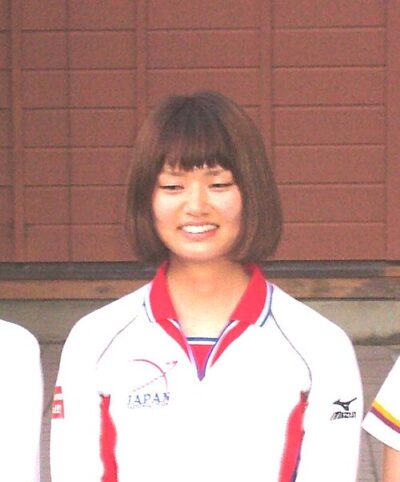
Kaori Kawanaka
Kaori Kawanaka is a Japanese archer. Born August 3, 1991, in Kotoura. Educated at Kindai University.
Facts
7 facts · 1 confirmed by two sources · 0 cited · 6 from one source
Where this comes from
Papalocal keeps its own record. It started from these sources; what each one said is kept here as it was copied, so a change on their side never changes this page by itself. Tap one to read its version.
What Wikidata says · copied November 18, 2026 · revision 2526834235
- Described as
- Japanese archer
- Born
- August 3, 1991 · 1 reference
- Born in
- Kotoura
- Citizen of
- Japan
- Occupation
- archer · 1 reference
- Education
- Kindai University
- Sport
- archery
- Height
- 1.59 m (5 ft 3 in)
- Wikipedias with a page
- 23
Wikidata item Q2296119 (wikidata.org/wiki/Q2296119), public domain (CC0). Copied November 18, 2026.
What Wikipedia says · copied November 18, 2026 · revision 1304962697
Kaori Kawanaka (川中 香緒里, Kawanaka Kaori; born August 3, 1991) is a Japanese archer who competed at the 2012 and 2016 Olympic Games.
Kawanaka won a bronze medal at the 2012 Summer Olympics in the women's team event with teammates Ren Hayakawa and Miki Kanie. Their success, which came after a narrow victory over Russia in the third-place match, marked the first Olympic medal for Japan in team archery. Kawanaka was less successful in the women's individual event, losing in the opening elimination round.
Kawanaka has contested the Asian Games twice. She was the flagbearer for the Japanese team at the opening ceremony of the 2014 Asian Games, and later won bronze in the women's team recurve competition with Hayakawa and Yuki Hayashi.
At the 2016 Summer Olympics, she again competed in the individual and team events, reaching the second round in the individual event, and the quarterfinal in the women's team event.
- Born, in its opening lines
- August 3, 1991
From the Wikipedia article “Kaori Kawanaka” (en.wikipedia.org/wiki/Kaori_Kawanaka), by its contributors, under CC BY-SA 4.0 (creativecommons.org/licenses/by-sa/4.0/). Copied November 18, 2026; not changed.
Confirmed Two sources agree. Cited One source, and it names where it got it. One source One source, without a reference of its own. Sources disagree The sources disagree. We show the best-supported value and keep theirs below.
