
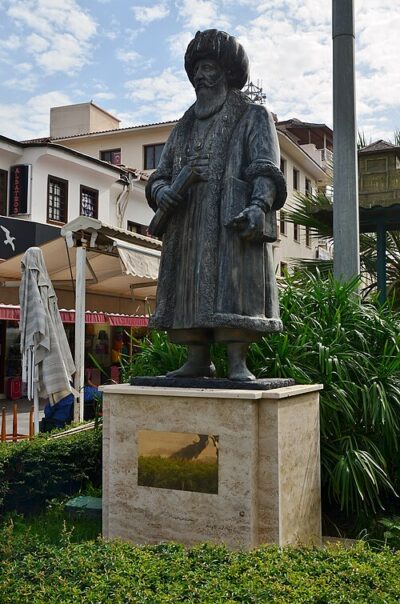
Kara Mehmed Paşa was an Ottoman grand vizier. Born 1557, in Istanbul. Died December 23, 1619, in Aleppo. Positions held include grand vizier of the Ottoman Empire (2 times) (1614–1619) and Beylerbey of Egypt (1607–1611).
Facts
11 facts · 0 confirmed by two sources · 2 cited · 9 from one source
Where this comes from
Papalocal keeps its own record. It started from these sources; what each one said is kept here as it was copied, so a change on their side never changes this page by itself. Tap one to read its version.
What Wikidata says · copied November 18, 2026 · revision 2569008756
- Described as
- Ottoman grand vizier (1557–1619)
- Other names
- Öküz Mehmed Pasha, Kara Mehmed Pasha
- Born
- 1557
- Died
- December 23, 1619 · 1 reference
- Born in
- Istanbul
- Died in
- Aleppo
- Buried in
- Aleppo
- Citizen of
- Ottoman Empire
- Occupation
- politician · 1 reference
- Positions held
- grand vizier of the Ottoman Empire (2 times) (1614–1619); Beylerbey of Egypt (1607–1611)
- Spouse
- Gevherhan Sultan
- Military rank
- admiral
- Wikipedias with a page
- 20
Wikidata item Q3820159 (wikidata.org/wiki/Q3820159), public domain (CC0). Copied November 18, 2026.
What Wikipedia says · copied November 18, 2026 · revision 1379909201
"Öküz" Damat Mehmed Pasha ("Mehmed Pasha the Ox"), also known as Kara Mehmed Pasha ("the Black") or "Kul Kıran" Mehmed Pasha ("the Slave-breaker"), was an Ottoman Turkish statesman, administrator, and military figure of the early 17th century. He served as Grand Vizier of the Ottoman Empire twice: October 17, 1614 – November 17, 1616 (during the reign of Sultan Ahmed I), and January 18, 1619 – December 23, 1619 (during the reign of Osman II). He also served as the Ottoman governor of Egypt from 1607 to 1611.
Mehmed's nickname, "Kul Kıran" (slave-breaker), came from his success in crushing the mutiny in Egypt during the early 1600s. Soldiers were often known as kul, meaning slave.
From the Wikipedia article “Öküz Mehmed Pasha” (en.wikipedia.org/wiki/Öküz_Mehmed_Pasha), by its contributors, under CC BY-SA 4.0 (creativecommons.org/licenses/by-sa/4.0/). Copied November 18, 2026; not changed.
Confirmed Two sources agree. Cited One source, and it names where it got it. One source One source, without a reference of its own. Sources disagree The sources disagree. We show the best-supported value and keep theirs below.
