
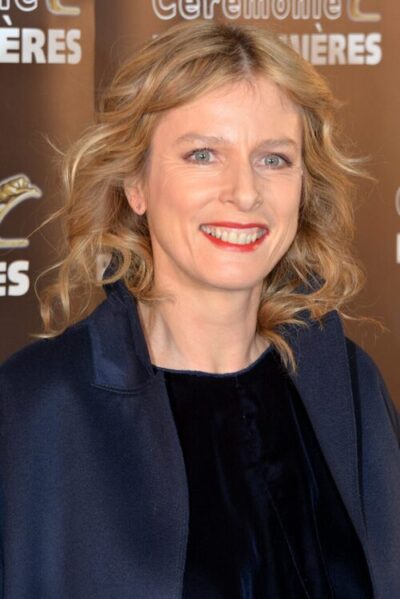
Karin Viard
Karin Viard is a French actress. Born January 24, 1966, in Rouen. Educated at Conservatoire de Rouen and Lycée Pierre-Corneille. Awards include Knight of the National Order of Merit, César Award for Best Actress and César Award for Best Supporting Actress.
Facts
19 facts · 1 confirmed by two sources · 4 cited · 14 from one source
Where this comes from
Papalocal keeps its own record. It started from these sources; what each one said is kept here as it was copied, so a change on their side never changes this page by itself. Tap one to read its version.
What Wikidata says · copied November 16, 2026 · revision 2546548031
- Described as
- French actress
- Born
- January 24, 1966 · 3 references
- Born in
- Rouen · 1 reference
- Citizen of
- France
- Occupation
- stage actor; film actor; screenwriter; actor · 1 reference
- Education
- Conservatoire de Rouen; Lycée Pierre-Corneille · 1 reference; Institution Rey
- Awards
- Knight of the National Order of Merit; César Award for Best Actress (2000); César Award for Best Supporting Actress (2003); Commandeur des Arts et des Lettres (2022) · 1 reference
- Spouse
- Laurent Machuel
- Children
- Simone Machuel; Marguerite Machuel
- Lived in
- Oran · 1 reference; Bois-Guillaume · 1 reference
- Wikipedias with a page
- 30
Wikidata item Q271944 (wikidata.org/wiki/Q271944), public domain (CC0). Copied November 16, 2026.
What Wikipedia says · copied November 16, 2026 · revision 1376443041
Karin Viard (French: [ka.ʁin vjaʁ]; born 24 January 1966) is a French actress. She made her film debut in Tatie Danielle in 1990. She has appeared in films such as Delicatessen, L'Emploi du temps, Adultère, mode d'emploi and La parenthèse enchantée.
Viard was a member of the 2003 Cannes Film Festival jury.
- Born, in its opening lines
- January 24, 1966
From the Wikipedia article “Karin Viard” (en.wikipedia.org/wiki/Karin_Viard), by its contributors, under CC BY-SA 4.0 (creativecommons.org/licenses/by-sa/4.0/). Copied November 16, 2026; not changed.
Confirmed Two sources agree. Cited One source, and it names where it got it. One source One source, without a reference of its own. Sources disagree The sources disagree. We show the best-supported value and keep theirs below.
