
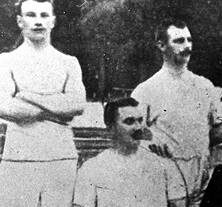
Karl Staaf
Karl Staaf was a Swedish athlete. Born April 6, 1881, in Kungsholm parish. Died February 15, 1953, in Motala parish.
Facts
8 facts · 2 confirmed by two sources · 2 cited · 4 from one source
Where this comes from
Papalocal keeps its own record. It started from these sources; what each one said is kept here as it was copied, so a change on their side never changes this page by itself. Tap one to read its version.
What Wikidata says · copied November 18, 2026 · revision 2550390913
- Described as
- Swedish athlete (1881–1953)
- Other names
- Karl Gustaf Staaf
- Born
- April 6, 1881 · 1 reference
- Died
- February 15, 1953 · 1 reference
- Born in
- Kungsholm parish · 1 reference
- Died in
- Motala parish · 1 reference
- Citizen of
- Sweden
- Occupation
- athletics competitor
- Sport
- athletics; tug of war
- Wikipedias with a page
- 22
Wikidata item Q518099 (wikidata.org/wiki/Q518099), public domain (CC0). Copied November 18, 2026.
What Wikipedia says · copied November 18, 2026 · revision 1317479360
Karl Gustaf Vilhelm Staaf (April 6, 1881 – February 15, 1953) was a Swedish track and field athlete and tug of war competitor who competed at the 1900 Summer Olympics. He was born in Stockholm and died in Motala.
He finished seventh in the pole vault competition and fifth in the hammer throw event. In the triple jump event and in the standing triple jump event his exact results are unknown.
He also participated on the Dano-Swedish tug of war team which won the gold medal against opponents France. These were the first Olympic gold medals for Sweden.
Staaf represented Djurgårdens IF.
- Born, in its opening lines
- April 6, 1881
- Died, in its opening lines
- February 15, 1953
From the Wikipedia article “Karl Gustaf Staaf” (en.wikipedia.org/wiki/Karl_Gustaf_Staaf), by its contributors, under CC BY-SA 4.0 (creativecommons.org/licenses/by-sa/4.0/). Copied November 18, 2026; not changed.
Confirmed Two sources agree. Cited One source, and it names where it got it. One source One source, without a reference of its own. Sources disagree The sources disagree. We show the best-supported value and keep theirs below.
