
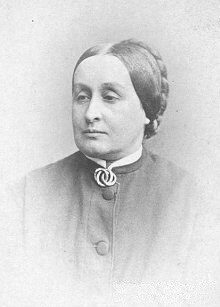
Karolina Světlá
Karolina Světlá was a Czech writer and bookwriter. Born February 24, 1830, in Prague. Died September 7, 1899, in New Town. Known for Černý Petříček, A Village Novel and Kříž u potoka.
Facts
19 facts · 2 confirmed by two sources · 5 cited · 12 from one source
Where this comes from
Papalocal keeps its own record. It started from these sources; what each one said is kept here as it was copied, so a change on their side never changes this page by itself. Tap one to read its version.
What Wikidata says · copied November 17, 2026 · revision 2561118532
- Described as
- Czech writer and bookwriter (1830-1899)
- Other names
- Johana Rottová, Johana Rottova, Karolína Svetlá, Karolina Svetla
- Born
- February 24, 1830 · 8 references
- Died
- September 7, 1899 · 8 references
- Born in
- Prague · 3 references
- Died in
- New Town · 1 reference
- Buried in
- Olšany Cemetery · 1 reference
- Cause of death
- senility · 1 reference
- Name at birth
- Johanna Nepomucena Rottová
- Citizen of
- Austria–Hungary
- Occupation
- writer · 1 reference; prose writer · 1 reference
- Known for
- Černý Petříček; A Village Novel (1867); Kříž u potoka (1868); Nemodlenec (1873); Frantina
- Field
- rural literature
- Spouse
- Petr Mužák
- Father
- Eustach Rott
- Siblings
- Sofie Podlipská
- Wikipedias with a page
- 25
Wikidata item Q258960 (wikidata.org/wiki/Q258960), public domain (CC0). Copied November 17, 2026.
What Wikipedia says · copied November 17, 2026 · revision 1373423176
Karolina Světlá (born Johana Nepomucena Rottová; 24 February 1830 – 7 September 1899) was a Czech writer and feminist. She is among the most important Czech female writers of the 19th century.
- Born, in its opening lines
- February 24, 1830
- Died, in its opening lines
- September 7, 1899
From the Wikipedia article “Karolina Světlá” (en.wikipedia.org/wiki/Karolina_Světlá), by its contributors, under CC BY-SA 4.0 (creativecommons.org/licenses/by-sa/4.0/). Copied November 17, 2026; not changed.
Confirmed Two sources agree. Cited One source, and it names where it got it. One source One source, without a reference of its own. Sources disagree The sources disagree. We show the best-supported value and keep theirs below.
