
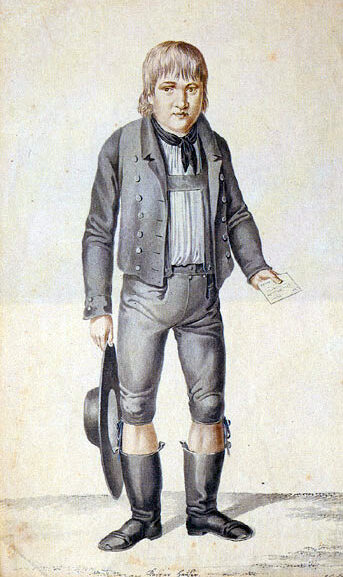
Kaspar Hauser
Kaspar Hauser was a man with a mysterious history. Born April 30, 1812. Died December 17, 1833, in Ansbach.
Facts
10 facts · 2 confirmed by two sources · 1 cited · 7 from one source
Where this comes from
Papalocal keeps its own record. It started from these sources; what each one said is kept here as it was copied, so a change on their side never changes this page by itself. Tap one to read its version.
What Wikidata says · copied November 16, 2026 · revision 2568735056
- Described as
- man with a mysterious history (1812–1833)
- Other names
- Caspar Hauser, Kasper Hauser
- Born
- April 30, 1812 · 2 references
- Died
- December 17, 1833 · 2 references
- Died in
- Ansbach · 1 reference
- Buried in
- Ansbach
- Cause of death
- stab wound
- Citizen of
- Kingdom of Bavaria · 1 reference
- Occupation
- writer; painter · 1 reference; scribe · 1 reference
- Lived in
- Kingdom of Bavaria
- Wikipedias with a page
- 45
Wikidata item Q44600 (wikidata.org/wiki/Q44600), public domain (CC0). Copied November 16, 2026.
What Wikipedia says · copied November 16, 2026 · revision 1385716965
Kaspar Hauser (30 April 1812 – 17 December 1833) was a German youth who claimed to have grown up in the total isolation of a darkened cell. His claims, and his subsequent death from a stab wound, sparked much debate and controversy both in Nuremberg and abroad. Theories propounded at the time identified Hauser as a member of the grand ducal House of Baden, hidden away because of dynastic intrigue. However, there were also allegations that Hauser was an impostor. In 2024, a scientific study ruled out Hauser's princely descent by comparing mitochondrial DNA haplotypes with the House of Baden.
- Born, in its opening lines
- April 30, 1812
- Died, in its opening lines
- December 17, 1833
From the Wikipedia article “Kaspar Hauser” (en.wikipedia.org/wiki/Kaspar_Hauser), by its contributors, under CC BY-SA 4.0 (creativecommons.org/licenses/by-sa/4.0/). Copied November 16, 2026; not changed.
Confirmed Two sources agree. Cited One source, and it names where it got it. One source One source, without a reference of its own. Sources disagree The sources disagree. We show the best-supported value and keep theirs below.
