
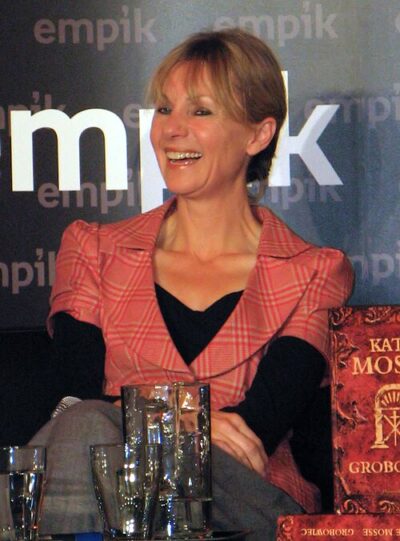
Kate Mosse is an English writer. Born October 20, 1961, in Chichester. Educated at New College. Awards include Officer of the Order of the British Empire and Fellow of the Royal Society of Literature.
Facts
14 facts · 0 confirmed by two sources · 7 cited · 7 from one source
Where this comes from
Papalocal keeps its own record. It started from these sources; what each one said is kept here as it was copied, so a change on their side never changes this page by itself. Tap one to read its version.
What Wikidata says · copied November 18, 2026 · revision 2569277604
- Described as
- English writer
- Other names
- Katharine Louise Mosse, Katharine Mosse
- Born
- October 20, 1961 · 6 references
- Born in
- Chichester · 1 reference
- Citizen of
- United Kingdom
- Occupation
- writer; television presenter · 1 reference; author · 1 reference
- Education
- New College · 1 reference
- Genre
- Gothic novel; historical fiction
- Awards
- Officer of the Order of the British Empire (2013) · 1 reference; Fellow of the Royal Society of Literature (2020) · 2 references
- Field
- writer
- Spouse
- Greg Mosse (2001–) · 3 references
- Website
- https://www.katemosse.co.uk
- Wikipedias with a page
- 24
Wikidata item Q262116 (wikidata.org/wiki/Q262116), public domain (CC0). Copied November 18, 2026.
What Wikipedia says · copied November 18, 2026 · revision 1382968090
Katherine Louise Mosse (born 1961) is a British novelist, non-fiction and short story writer and broadcaster. She is best known for her 2005 novel Labyrinth, which has been translated into more than 37 languages. She co-founded in 1996 the annual award for best UK-published English-language novel by a woman that is now known as the Women's Prize for Fiction, and since 2024 has a sister award, The Women's Prize for Nonfiction.
From the Wikipedia article “Kate Mosse” (en.wikipedia.org/wiki/Kate_Mosse), by its contributors, under CC BY-SA 4.0 (creativecommons.org/licenses/by-sa/4.0/). Copied November 18, 2026; not changed.
Confirmed Two sources agree. Cited One source, and it names where it got it. One source One source, without a reference of its own. Sources disagree The sources disagree. We show the best-supported value and keep theirs below.
