
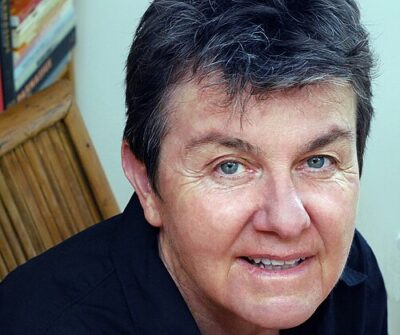
Kay Ryan is an American poet. Born September 21, 1945, in San Jose. Known for The Best of It. Educated at University of California, Los Angeles and Antelope Valley College. Awards include Guggenheim Fellowship, MacArthur Fellows Program and Pulitzer Prize for Poetry.
Facts
18 facts · 1 confirmed by two sources · 10 cited · 7 from one source
Where this comes from
Papalocal keeps its own record. It started from these sources; what each one said is kept here as it was copied, so a change on their side never changes this page by itself. Tap one to read its version.
What Wikidata says · copied November 18, 2026 · revision 2566950126
- Described as
- American poet
- Born
- September 21, 1945 · 1 reference
- Born in
- San Jose · 1 reference
- Citizen of
- United States
- Occupation
- poet · 1 reference; writer; teacher · 1 reference
- Education
- University of California, Los Angeles; Antelope Valley College
- Member of
- American Academy of Arts and Letters
- Known for
- The Best of It · 1 reference
- Awards
- Guggenheim Fellowship (2004) · 1 reference; MacArthur Fellows Program; Pulitzer Prize for Poetry (2011) · 1 reference; National Humanities Medal (2012) · 2 references; Ruth Lilly Poetry Prize (2004) · 1 reference; Truman Capote Award for Literary Criticism (2021) · 1 reference
- Field
- poetry · 1 reference; education · 1 reference
- Wikipedias with a page
- 15
Wikidata item Q276423 (wikidata.org/wiki/Q276423), public domain (CC0). Copied November 18, 2026.
What Wikipedia says · copied November 18, 2026 · revision 1371898428
Kay Ryan (born September 21, 1945) is an American poet and educator. She has published seven volumes of poetry and an anthology of selected and new poems. From 2008 to 2010 she was the sixteenth United States Poet Laureate. In 2011 she was named a MacArthur Fellow and she won the Pulitzer Prize.
- Born, in its opening lines
- September 21, 1945
From the Wikipedia article “Kay Ryan” (en.wikipedia.org/wiki/Kay_Ryan), by its contributors, under CC BY-SA 4.0 (creativecommons.org/licenses/by-sa/4.0/). Copied November 18, 2026; not changed.
Confirmed Two sources agree. Cited One source, and it names where it got it. One source One source, without a reference of its own. Sources disagree The sources disagree. We show the best-supported value and keep theirs below.
