
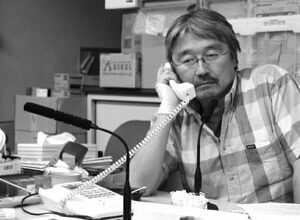
Kenji Nagai
Kenji Nagai was a Japanese journalist. Born August 27, 1957, in Imabari. Died September 27, 2007, in Yangon. Educated at Tokyo Keizai University.
Facts
10 facts · 2 confirmed by two sources · 0 cited · 8 from one source
Where this comes from
Papalocal keeps its own record. It started from these sources; what each one said is kept here as it was copied, so a change on their side never changes this page by itself. Tap one to read its version.
What Wikidata says · copied November 18, 2026 · revision 2545922902
- Described as
- Japanese journalist (1957–2007)
- Born
- August 27, 1957
- Died
- September 27, 2007 · 1 reference
- Born in
- Imabari
- Died in
- Yangon
- Citizen of
- Japan
- Occupation
- photographer; journalist; photojournalist; war photographer
- Education
- Tokyo Keizai University
- Wikipedias with a page
- 20
Wikidata item Q381369 (wikidata.org/wiki/Q381369), public domain (CC0). Copied November 18, 2026.
What Wikipedia says · copied November 18, 2026 · revision 1386067421
Kenji Nagai (長井 健司, Nagai Kenji; August 27, 1957 – September 27, 2007) was a Japanese photojournalist who took many assignments to conflict zones and dangerous areas around the world.
He was shot dead in Myanmar during the Saffron Revolution while filming. Nagai continued to take photographs as he lay wounded on the ground, later dying from gunshot injuries to the chest. The government of Myanmar claimed that the cause of his death was a stray bullet; this was later disproven. Despite carrying his camera during a protest in the Saffron Revolution, it later went missing, supposedly because a Myanmar soldier had taken it. In 2023, the camera and footage were returned. He was the only foreign national killed in the protests.
- Born, in its opening lines
- August 27, 1957
- Died, in its opening lines
- September 27, 2007
From the Wikipedia article “Kenji Nagai” (en.wikipedia.org/wiki/Kenji_Nagai), by its contributors, under CC BY-SA 4.0 (creativecommons.org/licenses/by-sa/4.0/). Copied November 18, 2026; not changed.
Confirmed Two sources agree. Cited One source, and it names where it got it. One source One source, without a reference of its own. Sources disagree The sources disagree. We show the best-supported value and keep theirs below.
