
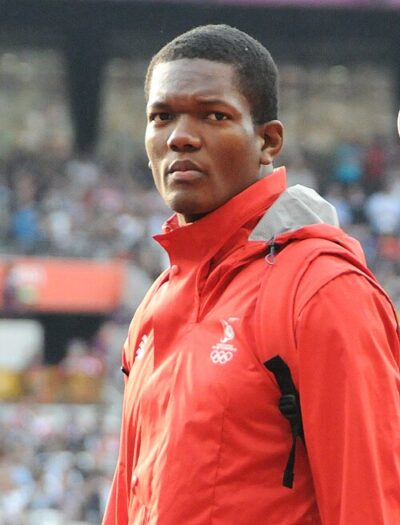
Keshorn Walcott is a Trinidadian javelin thrower. Born April 2, 1993, in Toco.
Facts
8 facts · 1 confirmed by two sources · 1 cited · 6 from one source
Where this comes from
Papalocal keeps its own record. It started from these sources; what each one said is kept here as it was copied, so a change on their side never changes this page by itself. Tap one to read its version.
What Wikidata says · copied November 16, 2026 · revision 2569413167
- Described as
- Trinidadian javelin thrower
- Born
- April 2, 1993 · 1 reference
- Born in
- Toco
- Citizen of
- Trinidad and Tobago
- Occupation
- javelin thrower; athletics competitor · 1 reference
- Sport
- athletics
- Lived in
- Port of Spain · 1 reference
- Height
- 1.83 m (6 ft 0 in)
- Wikipedias with a page
- 31
Wikidata item Q1787 (wikidata.org/wiki/Q1787), public domain (CC0). Copied November 16, 2026.
What Wikipedia says · copied November 16, 2026 · revision 1375268771
Keshorn "Keshie" Walcott, ORTT (born 2 April 1993) is a Trinidadian track and field athlete who competes in the javelin throw. He is the 2012 Olympic champion and the 2025 World champion. He is the first Caribbean male athlete, as well as the first of African descent, to win the gold medal in a throwing event in the history of the Olympics. He is also the holder of the North, Central American and Caribbean junior record.
Walcott is the youngest Olympic gold medallist in the men's javelin (19 years 131 days), and the first athlete in any track and field event to win World Junior and Olympic titles in an individual event the same year. He is also the second-oldest gold medallist in the men's javelin at the World Championships (32 years 169 days).
- Born, in its opening lines
- April 2, 1993
From the Wikipedia article “Keshorn Walcott” (en.wikipedia.org/wiki/Keshorn_Walcott), by its contributors, under CC BY-SA 4.0 (creativecommons.org/licenses/by-sa/4.0/). Copied November 16, 2026; not changed.
Confirmed Two sources agree. Cited One source, and it names where it got it. One source One source, without a reference of its own. Sources disagree The sources disagree. We show the best-supported value and keep theirs below.
