
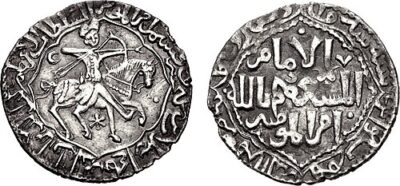
Kilij Arslan IV
Kilij Arslan IV was a Sultan of Rum. Born 1230s. Died 1265. Positions held include Sultan of Rum (1249–).
Facts
9 facts · 0 confirmed by two sources · 1 cited · 8 from one source
Where this comes from
Papalocal keeps its own record. It started from these sources; what each one said is kept here as it was copied, so a change on their side never changes this page by itself. Tap one to read its version.
What Wikidata says · copied November 18, 2026 · revision 2553981268
- Described as
- Sultan of Rum
- Born
- 1230s
- Died
- 1265
- Buried in
- Konya Province
- Name at birth
- رکن الدین قلج ارسلان بن کیخسرو
- Citizen of
- Seljuk Empire · 1 reference
- Occupation
- head of state
- Positions held
- Sultan of Rum (1249–)
- Children
- Kaykhusraw III · 1 reference
- Father
- Kaykhusraw II
- Wikipedias with a page
- 22
Wikidata item Q770205 (wikidata.org/wiki/Q770205), public domain (CC0). Copied November 18, 2026.
What Wikipedia says · copied November 18, 2026 · revision 1385069232
Kilij Arslan IV (Old Anatolian Turkish: قِلِج اَرسلان) or Rukn ad-Dīn Qilij Arslān ibn Kaykhusraw (Turkish: Rükneddin Kılıçarslan, Persian: رکن الدین قلیچ ارسلان بن کیخسرو) was twice the Seljuk Sultan of Rûm from 1249 to 1254 and later from 1257 to 1265.
However, a jarlig issued by Güyük Khan confirmed him as sultan over his elder brother, Kaykaus II in 1248. But this jarlig would quickly be worthless after Güyük's death in the same year. Later, Arslan's supporters killed Shams al-Din Isfahani, a supporter of his brother, Kaykaus II (a rival to the throne). The death of Isfahani's successor in 1254, Jalāl-al-Din Qaraṭāy, left a power vacuum which was filled by competition by supporters of the two brothers. Kaykaus II would emerge the victor in 1257 with support from the Empire of Nicaea, but would be later defeated in 1262, as Arslan was supported by the Ilkhanate.
In the 1260s, Mu'in al-Din Parwana redistributed Seljuk crown lands among his followers. He did this to secure his position but would be met with protests from Arslan. This eventually led to Arslan's execution in 1265 by Parwana.
From the Wikipedia article “Kilij Arslan IV” (en.wikipedia.org/wiki/Kilij_Arslan_IV), by its contributors, under CC BY-SA 4.0 (creativecommons.org/licenses/by-sa/4.0/). Copied November 18, 2026; not changed.
Confirmed Two sources agree. Cited One source, and it names where it got it. One source One source, without a reference of its own. Sources disagree The sources disagree. We show the best-supported value and keep theirs below.
