
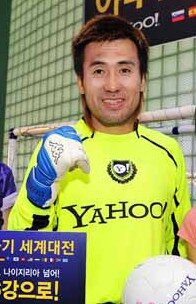
Kim Byung-ji is a South Korean footballer. Born April 8, 1970, in Miryang. Teams include FC Seoul (2006–2008), Ulsan HD FC (1992–2000) and Jeonnam Dragons FC (2013–2015). Educated at Joongbu University and Miryang Elementary School.
Facts
17 facts · 1 confirmed by two sources · 0 cited · 16 from one source
Where this comes from
Papalocal keeps its own record. It started from these sources; what each one said is kept here as it was copied, so a change on their side never changes this page by itself. Tap one to read its version.
What Wikidata says · copied November 18, 2026 · revision 2553029888
- Described as
- South Korean footballer
- Born
- April 8, 1970 · 2 references
- Born in
- Miryang
- Citizen of
- South Korea
- Occupation
- association football player · 1 reference; television producer · 1 reference
- Education
- Joongbu University; Miryang Elementary School; Milyang Middle School
- Teams
- FC Seoul (2006–2008); Ulsan HD FC (1992–2000); Jeonnam Dragons FC (2013–2015); Gyeongnam FC (2009–2012); FC Pohang Steelers (2001–2005); Korea Armed Forces Athletic Corps (1990–1992); South Korea men's national football team (1995–2008)
- Sport
- association football
- Height
- 1.84 m (6 ft 0 in)
- Wikipedias with a page
- 20
Wikidata item Q486147 (wikidata.org/wiki/Q486147), public domain (CC0). Copied November 18, 2026.
What Wikipedia says · copied November 18, 2026 · revision 1383922041
Kim Byung-ji (Korean: 김병지; born 8 April 1970) is a South Korean football administrator and former player. He played as a goalkeeper for the South Korea national team at the 1998 FIFA World Cup (and also a member at the 2002 tournament). He is currently the director of K League 1 club Gangwon FC and a vice-president of the Korea Football Association.
- Born, in its opening lines
- April 8, 1970
From the Wikipedia article “Kim Byung-ji” (en.wikipedia.org/wiki/Kim_Byung-ji), by its contributors, under CC BY-SA 4.0 (creativecommons.org/licenses/by-sa/4.0/). Copied November 18, 2026; not changed.
Confirmed Two sources agree. Cited One source, and it names where it got it. One source One source, without a reference of its own. Sources disagree The sources disagree. We show the best-supported value and keep theirs below.
