
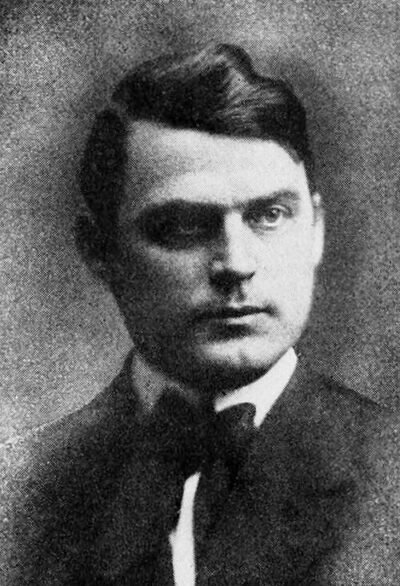
Kin Hubbard
Kin Hubbard was an American cartoonist. Born September 1, 1868, in Bellefontaine. Died December 26, 1930, in Indianapolis. Known for Abe Martin of Brown County.
Facts
10 facts · 2 confirmed by two sources · 2 cited · 6 from one source
Where this comes from
Papalocal keeps its own record. It started from these sources; what each one said is kept here as it was copied, so a change on their side never changes this page by itself. Tap one to read its version.
What Wikidata says · copied November 16, 2026 · revision 2516365785
- Described as
- American cartoonist (1868–1930)
- Other names
- Frank McKinney Hubbard
- Born
- September 1, 1868 · 3 references
- Died
- December 26, 1930 · 3 references
- Born in
- Bellefontaine
- Died in
- Indianapolis
- Buried in
- Crown Hill Cemetery · 1 reference
- Citizen of
- United States
- Occupation
- humorist; journalist; writer · 1 reference
- Known for
- Abe Martin of Brown County · 1 reference
- Wikipedias with a page
- 22
Wikidata item Q6410310 (wikidata.org/wiki/Q6410310), public domain (CC0). Copied November 16, 2026.
What Wikipedia says · copied November 16, 2026 · revision 1371956901
Frank McKinney Hubbard (September 1, 1868 – December 26, 1930), better known as Kin Hubbard, was an American cartoonist, humorist, and journalist. His most famous work was for "Abe Martin". Introduced in The Indianapolis News in December 1904, the cartoon appeared six days a week on the back page of the News for twenty-six years. The Abe Martin cartoons went into national print syndication in 1910, eventually appearing in some two hundred U.S. newspapers. Hubbard also originated and illustrated a once-a-week humor essay for the "Short Furrows" column in the Sunday edition of the News that went into syndication in 1911. The self-taught artist and writer made more than eight thousand drawings for the Indianapolis News and wrote and illustrated about a thousand essays for the "Short Furrows" column. His first published book was Collection of Indiana Lawmaker and Lobbyists (1903), followed by an annual series of Abe Martin-related books between 1906 and 1930, as well as other works such as Short Furrows (1912) and Book of Indiana (1929). Humorist Will Rogers once declared that Hubbard was "America's greatest humorist".
A few months after introducing his Abe Martin cartoon in 1904, Hubbard moved the setting of his most famous character to the fictional town of Bloom Center in rural Brown County, Indiana. He also added more characters to the cartoon series over the years, typically communicated his many quips and sharp-eyed observations of everyday life by pairing two sentences of humorous, but unrelated observations, in each cartoon. For years after Hubbard's death in 1930, the Indianapolis News and other newspapers continued to print his Abe Martin cartoon series. In 1932, the Indiana Department of Natural Resources dedicated Brown County State Park to Hubbard and named the park's guest accommodations the Abe Martin Lodge. Hubbard was inducted into the Ohio Journalism Hall of Fame in 1939 and the Indiana Journalism Hall of Fame in 1967. His humor and quips remain in use and continue to entertain readers through the Abe Martin books, as well as Hubbard's longer essays, cartoons, and other published works.
- Born, in its opening lines
- September 1, 1868
- Died, in its opening lines
- December 26, 1930
From the Wikipedia article “Kin Hubbard” (en.wikipedia.org/wiki/Kin_Hubbard), by its contributors, under CC BY-SA 4.0 (creativecommons.org/licenses/by-sa/4.0/). Copied November 16, 2026; not changed.
Confirmed Two sources agree. Cited One source, and it names where it got it. One source One source, without a reference of its own. Sources disagree The sources disagree. We show the best-supported value and keep theirs below.
