
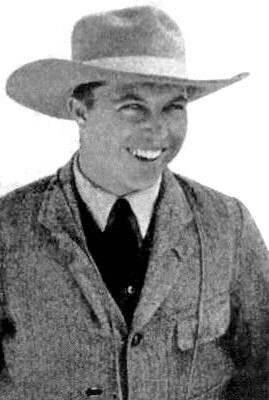
King Vidor
King Vidor was an American film director, film producer, and screenwriter. Born February 8, 1894, in Galveston. Died November 1, 1982, in Paso Robles. Known for The Big Parade, The Crowd and Hallelujah!. Educated at Peacock Military Academy. Awards include Academy Honorary Award, Golden Plate Award and National Board of Review Award for Best Film.
Facts
33 facts · 2 confirmed by two sources · 12 cited · 19 from one source
Where this comes from
Papalocal keeps its own record. It started from these sources; what each one said is kept here as it was copied, so a change on their side never changes this page by itself. Tap one to read its version.
What Wikipedia says · copied November 13, 2026 · revision 1371294510
King Wallis Vidor ( VEE-dor; February 8, 1894 – November 1, 1982) was an American film director, film producer, and screenwriter. His 67-year career spanned the silent and sound eras, with works distinguished by a sympathetic depiction of contemporary social issues. Considered an auteur director, Vidor approached multiple genres and allowed the subject matter to determine the style, often pressing the limits of film-making conventions.
His most acclaimed and successful film in the silent era was The Big Parade (1925). Vidor's sound films of the 1940s and early 1950s, such as Northwest Passage (1940), Comrade X (1940), An American Romance (1944), and The Fountainhead (1949), have been characterized as some of his best. His dramatic depictions of the American western landscape endow nature with a sinister force where his characters struggle for survival and redemption. Vidor's earlier films tend to identify with the common people in a collective struggle, whereas his later works place individualists at the center of his narratives.
He was considered an "actors' director"; many of his players received Academy Award nominations or awards, among them Wallace Beery, Robert Donat, Barbara Stanwyck, Jennifer Jones, Anne Shirley, and Lillian Gish. Vidor was nominated five times by the Academy Awards for Best Director. In 1979, he was awarded an Honorary Academy Award for his "incomparable achievements as a cinematic creator and innovator." Additionally, he won eight national and international film awards during his career, including the Screen Directors Guild Lifetime Achievement Award in 1957. In 1962, he was head of the jury at the 12th Berlin International Film Festival. In 1969, he was a member of the jury at the 6th Moscow International Film Festival.
- Born, in its opening lines
- February 8, 1894
- Died, in its opening lines
- November 1, 1982
From the Wikipedia article “King Vidor” (en.wikipedia.org/wiki/King_Vidor), by its contributors, under CC BY-SA 4.0 (creativecommons.org/licenses/by-sa/4.0/). Copied November 13, 2026; not changed.
What Wikidata says · copied November 14, 2026 · revision 2569061499
- Described as
- American film director, film producer, and screenwriter (1894-1982)
- Other names
- King W. Vidor, King Wallis Vidor
- Born
- February 8, 1894 · 10 references
- Died
- November 1, 1982 · 10 references
- Born in
- Galveston · 1 reference
- Died in
- Paso Robles · 1 reference
- Cause of death
- cardiovascular disease
- Citizen of
- United States · 1 reference
- Occupation
- film director · 2 references; film producer · 1 reference; screenwriter · 1 reference; director · 2 references; film screenwriter; writer
- Political party
- California Republican Party
- Education
- Peacock Military Academy
- Known for
- The Big Parade (1925); The Crowd (1928); Hallelujah! (1929); The Champ (1931); Our Daily Bread (1934); Stella Dallas (1937); The Citadel (1938); Northwest Passage (1940); Duel in the Sun (1946); Beyond the Forest (1949)
- Awards
- Academy Honorary Award (1979) · 1 reference; Golden Plate Award (1964) · 1 reference; National Board of Review Award for Best Film; star on Hollywood Walk of Fame · 1 reference
- Spouse
- Florence Vidor (1915–1924) · 1 reference; Eleanor Boardman (1926–1931) · 1 reference; Elizabeth Hill · 1 reference
- Children
- Belinda Vidor
- Religion
- Christian Science
- Wikipedias with a page
- 46
Wikidata item Q51133 (wikidata.org/wiki/Q51133), public domain (CC0). Copied November 14, 2026.
Confirmed Two sources agree. Cited One source, and it names where it got it. One source One source, without a reference of its own. Sources disagree The sources disagree. We show the best-supported value and keep theirs below.
