
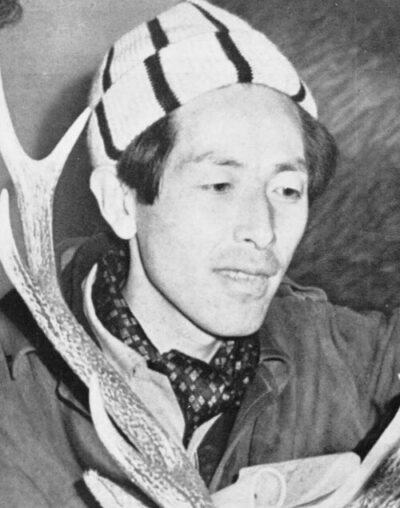
Kinji Fukasaku
Kinji Fukasaku was a Japanese film director and screenwriter. Born July 3, 1930, in Midorioka. Died January 12, 2003, in Tokyo. Educated at Nihon University. Awards include Japan Academy Film Prize, Japan Academy Prize for Director of the Year (2 times) and Medal with Purple Ribbon.
Facts
22 facts · 2 confirmed by two sources · 3 cited · 16 from one source · 1 where the sources disagree
What’s different
- Cause of death: we show cancer (Sources disagree). Wikidata also lists prostate cancer
Where this comes from
Papalocal keeps its own record. It started from these sources; what each one said is kept here as it was copied, so a change on their side never changes this page by itself. Tap one to read its version.
What Wikidata says · copied November 17, 2026 · revision 2568168132
- Described as
- Japanese film director and screenwriter (1930–2003)
- Other names
- Fukasaku Kinji
- Born
- July 3, 1930 · 5 references
- Died
- January 12, 2003 · 5 references
- Born in
- Midorioka
- Died in
- Tokyo · 1 reference
- Cause of death
- cancer; prostate cancer
- Citizen of
- Japan; Empire of Japan (–1947)
- Occupation
- film director; screenwriter · 1 reference; film producer; actor · 2 references; director · 2 references
- Education
- Nihon University
- Awards
- Japan Academy Film Prize; Japan Academy Prize for Director of the Year (2 times) (1983, 1987); Medal with Purple Ribbon (1997); Blue Ribbon Awards for Best Director (2 times) (1976, 1983); Nikkan Sports Film Award for Best Director (2 times) (1994, 1999); Golden Arrow Award; Mainichi Film Award for Best Director
- Spouse
- Sanae Nakahara
- Children
- Kenta Fukasaku
- Wikipedias with a page
- 27
Wikidata item Q470779 (wikidata.org/wiki/Q470779), public domain (CC0). Copied November 17, 2026.
What Wikipedia says · copied November 17, 2026 · revision 1385507010
Kinji Fukasaku (Japanese: 深作 欣二, Hepburn: Fukasaku Kinji; 3 July 1930 – 12 January 2003) was a Japanese filmmaker. Known for his "broad range and innovative filmmaking", he worked in many different genres and styles, but was best known for his gritty yakuza films, typified by the Battles Without Honor and Humanity series (1973–1976). According to the Berkeley Art Museum and Pacific Film Archive, his "turbulent energy and at times extreme violence express a cynical critique of social conditions and genuine sympathy for those left out of Japan's postwar prosperity". He used a cinema verite-inspired shaky camera technique in many of his films from the early 1970s.
Fukasaku wrote and directed over 60 films between 1961 and 2003. Some Western sources have associated him with the Japanese New Wave movement of the 1960s and 1970s, but this belies his commercial success. His works include the Japanese portion of the Hollywood war film Tora! Tora! Tora! (1970), jidaigeki such as Shogun's Samurai (1978), the space opera film Message from Space (1978), the science fiction film Virus (1980), the fantasy film Samurai Reincarnation (1981), and the highly influential dystopian thriller film Battle Royale (2000).
Fukasaku won the Japan Academy Film Prize for Director of the Year three times from nine nominations. He served as the sixth president of the Directors Guild of Japan from 1996 until his death from prostate cancer in 2003. He received the Purple Medal of Honor from the Japanese government for his work in 1997. His films have inspired directors such as Quentin Tarantino, William Friedkin, and John Woo.
- Born, in its opening lines
- July 3, 1930
- Died, in its opening lines
- January 12, 2003
From the Wikipedia article “Kinji Fukasaku” (en.wikipedia.org/wiki/Kinji_Fukasaku), by its contributors, under CC BY-SA 4.0 (creativecommons.org/licenses/by-sa/4.0/). Copied November 17, 2026; not changed.
Confirmed Two sources agree. Cited One source, and it names where it got it. One source One source, without a reference of its own. Sources disagree The sources disagree. We show the best-supported value and keep theirs below.
