
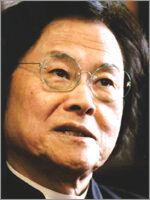
Kisho Kurokawa
Kisho Kurokawa was a Japanese architect. Born April 8, 1934, in Kanie. Died October 12, 2007, in Kawadachō. Known for Ōita Stadium, Toyota Stadium and Kuala Lumpur International Airport. Educated at Kyoto University and University of Tokyo. Awards include Chevalier des Arts et des Lettres, Person of Cultural Merit and honorary doctor of Sofia University.
Facts
42 facts · 2 confirmed by two sources · 6 cited · 33 from one source · 1 where the sources disagree
What’s different
- Cause of death: we show heart failure (Sources disagree). Wikidata also lists pancreatic cancer
Where this comes from
Papalocal keeps its own record. It started from these sources; what each one said is kept here as it was copied, so a change on their side never changes this page by itself. Tap one to read its version.
What Wikidata says · copied November 17, 2026 · revision 2565552168
- Described as
- Japanese architect (1934-2007)
- Other names
- Kisho N. Kurokawa, Kishō Kurokawa, Noriaki Kisho Kurokawa, Kisho Noriaki Kurokawa
- Born
- April 8, 1934 · 10 references
- Died
- October 12, 2007 · 13 references
- Born in
- Kanie · 1 reference
- Died in
- Kawadachō · 1 reference
- Buried in
- Baisō-in Temple
- Cause of death
- heart failure; pancreatic cancer
- Name at birth
- 黒川 紀章
- Citizen of
- Empire of Japan; Japan · 2 references
- Occupation
- architect · 4 references; thinker; businessperson · 1 reference; political activist
- Education
- Kyoto University; University of Tokyo; Tōkai Junior and Senior High School
- Member of
- Japan Art Academy; The Japanese Society of Landscape Designs; Architectural Institute of Japan
- Known for
- Ōita Stadium; Toyota Stadium; Kuala Lumpur International Airport; Nakagin Capsule Tower; Roppongi Prince Hotel; Nagoya City Art Museum; Hiroshima City Museum of Contemporary Art; National Museum of Ethnology
- Awards
- Chevalier des Arts et des Lettres (1989); Person of Cultural Merit (2006); honorary doctor of Sofia University; Japan Art Academy Prize (1992); Order of the cavalier of Madara · 1 reference; Order of the Lion of Finland (1985) · 1 reference; Friendship Award; Mainichi art award (1978); AIJ Prize (1990); Senior Fourth Rank (2007); Order of the Rising Sun, Gold and Silver Star (2007)
- Spouse
- Ayako Wakao (1983–) · 1 reference
- Father
- Miki Kurokawa · 1 reference
- Siblings
- Masayuki Kurokawa
- Website
- https://www.kisho.co.jp/
- Wikipedias with a page
- 27
Wikidata item Q358502 (wikidata.org/wiki/Q358502), public domain (CC0). Copied November 17, 2026.
What Wikipedia says · copied November 17, 2026 · revision 1382269638
Kisho Kurokawa (黒川 紀章, Kurokawa Kishō) (April 8, 1934 – October 12, 2007) was a leading Japanese architect and a founder of the Metabolist Movement.
- Born, in its opening lines
- April 8, 1934
- Died, in its opening lines
- October 12, 2007
From the Wikipedia article “Kisho Kurokawa” (en.wikipedia.org/wiki/Kisho_Kurokawa), by its contributors, under CC BY-SA 4.0 (creativecommons.org/licenses/by-sa/4.0/). Copied November 17, 2026; not changed.
Confirmed Two sources agree. Cited One source, and it names where it got it. One source One source, without a reference of its own. Sources disagree The sources disagree. We show the best-supported value and keep theirs below.
