
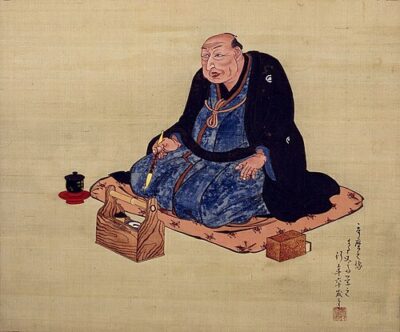
Kitagawa Utamaro
Kitagawa Utamaro was the 175?-1806 Japanese artist. Born 1753, in Kawagoe. Died October 31, 1806, in Edo. Known for Moonlight Revelry at Dozo Sagami and Three Beauties of the Present Day.
Facts
16 facts · 2 confirmed by two sources · 7 cited · 5 from one source · 2 where the sources disagree
What’s different
- Born: we show 1753 (Confirmed). Wikidata also lists 1754
- Born in: we show Kawagoe (Sources disagree). Wikidata also lists Edo
- Name at birth: we show 北川 勇助 (Sources disagree). Wikidata also lists 北川 市太郎
Where this comes from
Papalocal keeps its own record. It started from these sources; what each one said is kept here as it was copied, so a change on their side never changes this page by itself. Tap one to read its version.
What Wikidata says · copied November 16, 2026 · revision 2558082817
- Described as
- 175?-1806 Japanese artist
- Other names
- Utamaro, Outamaro, Nobuyoshi Kitagawa, Entaisai, Toyoaki, Utamaro Kitagawa, Ichitarō, Toyoaki Kitagawa, Yūsuke, Yūsuke Kitagawa, Shioku, Nobuyoshi Toriyama
- Born
- 1753 · 20 references; 1754 · 1 reference
- Died
- October 31, 1806 · 2 references
- Born in
- Kawagoe · 1 reference; Edo
- Died in
- Edo · 1 reference
- Buried in
- Senkō-ji Temple
- Name at birth
- 北川 勇助 · 1 reference; 北川 市太郎 · 1 reference
- Citizen of
- Japan · 2 references
- Occupation
- ukiyo-e artist · 1 reference; painter · 2 references; graphic artist · 1 reference; xylographer · 1 reference
- Genre
- bijin-ga; shunga · 1 reference
- Known for
- Moonlight Revelry at Dozo Sagami; Three Beauties of the Present Day
- Field
- erotic art · 1 reference
- Wikipedias with a page
- 50
Wikidata item Q272045 (wikidata.org/wiki/Q272045), public domain (CC0). Copied November 16, 2026.
What Wikipedia says · copied November 16, 2026 · revision 1381686396
Kitagawa Utamaro (喜多川 歌麿; Japanese pronunciation: [k̟ʲi̥.tä́.ɡä́.β̞ä́ | ɯ̈̀.tä́.mä́.ɾó̞, -β̞ä́ ɯ̈́-, -ŋä́-]; c. 1753 – 31 October 1806) was a Japanese artist. He is one of the most highly regarded designers of ukiyo-e woodblock prints and paintings, and is best known for his bijin ōkubi-e "large-headed pictures of beautiful women" of the 1790s. He also produced nature studies, particularly illustrated books of insects.
Little is known of Utamaro's life. His work began to appear in the 1770s, and he rose to prominence in the early 1790s with his portraits of beauties with exaggerated, elongated features. He produced over 2000 known prints and was one of the few ukiyo-e artists to achieve fame throughout Japan in his lifetime. In 1804 he was arrested and manacled for fifty days for making illegal prints depicting the 16th-century military ruler Toyotomi Hideyoshi, and died two years later.
Utamaro's work reached Europe in the mid-nineteenth century, where it was very popular, enjoying particular acclaim in France. He influenced the European Impressionists, particularly with his use of partial views and his emphasis on light and shade, which they imitated. The reference to the "Japanese influence" among these artists often refers to the work of Utamaro.
- Born, in its opening lines
- c. 1753
- Died, in its opening lines
- October 31, 1806
From the Wikipedia article “Utamaro” (en.wikipedia.org/wiki/Utamaro), by its contributors, under CC BY-SA 4.0 (creativecommons.org/licenses/by-sa/4.0/). Copied November 16, 2026; not changed.
Confirmed Two sources agree. Cited One source, and it names where it got it. One source One source, without a reference of its own. Sources disagree The sources disagree. We show the best-supported value and keep theirs below.
