
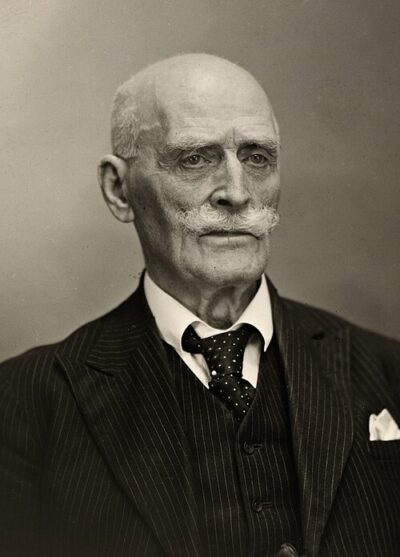
Knut Hamsun
Knut Hamsun was a Norwegian novelist. Born August 4, 1859, in Vågå. Died February 19, 1952, in Grimstad. Known for Hunger and Growth of the Soil. Awards include Nobel Prize in Literature and Goethe Medal for Art and Science.
Facts
25 facts · 2 confirmed by two sources · 6 cited · 16 from one source · 1 where the sources disagree
What’s different
- Born in: we show Vågå (Sources disagree). Wikidata also lists Lom Municipality
Where this comes from
Papalocal keeps its own record. It started from these sources; what each one said is kept here as it was copied, so a change on their side never changes this page by itself. Tap one to read its version.
What Wikidata says · copied November 16, 2026 · revision 2563196008
- Described as
- Norwegian novelist (1859–1952)
- Other names
- Knut Pedersen Hamsun, Hamsun
- Born
- August 4, 1859 · 17 references
- Died
- February 19, 1952 · 17 references
- Born in
- Vågå · 2 references; Lom Municipality · 2 references
- Died in
- Grimstad
- Buried in
- Nørholm · 1 reference
- Name at birth
- Knut Pedersen Hamsun
- Citizen of
- Norway · 1 reference
- Occupation
- writer · 2 references; poet; novelist; playwright · 2 references; critic · 1 reference
- Political party
- Nasjonal Samling
- Known for
- Hunger; Growth of the Soil
- Awards
- Nobel Prize in Literature (1920) · 2 references; Goethe Medal for Art and Science
- Spouse
- Marie Hamsun (1909–1952); Bergljot Bech (1898–1906)
- Children
- Arild Hamsun; Ellinor Hamsun; Tore Hamsun · 1 reference; Victoria Hamsun Charlesson
- Website
- https://hamsunsenteret.no/en/; https://hamsunsenteret.no/no/
- Wikipedias with a page
- 135
Wikidata item Q40826 (wikidata.org/wiki/Q40826), public domain (CC0). Copied November 16, 2026.
What Wikipedia says · copied November 16, 2026 · revision 1381807156
Knut Hamsun (; Norwegian: [ˈhɑmsʉn]; 4 August 1859 – 19 February 1952) was a Norwegian writer who was awarded the 1920 Nobel Prize in Literature for his novel Growth of the Soil. Hamsun's work spans more than 70 years and shows variation with regard to consciousness, subject, perspective and environment. He published more than 23 novels, a collection of poetry, some short stories and plays, a travelogue, works of non-fiction and some essays.
Hamsun is considered "one of the most influential and innovative literary stylists of the past hundred years" (c. 1890–1990). He pioneered psychological literature with techniques of stream of consciousness and interior monologue, and influenced authors such as Thomas Mann, Franz Kafka, Maxim Gorky, Stefan Zweig, Henry Miller, Hermann Hesse, John Fante, James Kelman, Charles Bukowski and Ernest Hemingway. Isaac Bashevis Singer called Hamsun "the father of the modern school of literature in his every aspect—his subjectiveness, his fragmentariness, his use of flashbacks, his lyricism. The whole modern school of fiction in the twentieth century stems from Hamsun". Since 1916, several of Hamsun's works have been adapted into motion pictures. On 4 August 2009, the Knut Hamsun Centre was opened in Hamarøy Municipality.
The young Hamsun objected to realism and naturalism. He argued that the main object of modernist literature should be the intricacies of the human mind, that writers should describe the "whisper of blood, and the pleading of bone marrow". Hamsun is considered the "leader of the Neo-Romantic revolt at the turn of the 20th century", with works such as Hunger (1890), Mysteries (1892), Pan (1894), and Victoria (1898). His later works—in particular his "Nordland novels"—were influenced by the Norwegian new realism, portraying everyday life in rural Norway and often employing local dialect, irony, and humour. Hamsun published only one poetry collection, The Wild Choir, which has been set to music by several composers.
Hamsun held strong Anglophobic views, and openly supported Adolf Hitler and Nazi Germany: he donated his Nobel Prize medal to Joseph Goebbels, propaganda Minister for the Third Reich and met Hitler during the German occupation of Norway. Due to his professed support for the occupation of Norway and the Quisling regime, he was charged with treason after the war. Due to alleged psychological problems and issues relating to old age, he was not convicted, but in 1948 he was heavily fined. Hamsun's last book, On Overgrown Paths, authored in semi-imprisonment in Landvik, concerned his postwar treatment and his rebuttal to accusations of mental ineptness.
- Born, in its opening lines
- August 4, 1859
- Died, in its opening lines
- February 19, 1952
From the Wikipedia article “Knut Hamsun” (en.wikipedia.org/wiki/Knut_Hamsun), by its contributors, under CC BY-SA 4.0 (creativecommons.org/licenses/by-sa/4.0/). Copied November 16, 2026; not changed.
Confirmed Two sources agree. Cited One source, and it names where it got it. One source One source, without a reference of its own. Sources disagree The sources disagree. We show the best-supported value and keep theirs below.
