
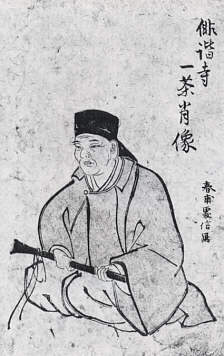
Kobayashi Issa
Kobayashi Issa was a Japanese writer. Born June 15, 1763, in Kashiwabara. Died January 5, 1828, in Kashiwabara. Known for The Spring of My Life and Last Days of Issa's Father.
Facts
15 facts · 2 confirmed by two sources · 1 cited · 12 from one source
Where this comes from
Papalocal keeps its own record. It started from these sources; what each one said is kept here as it was copied, so a change on their side never changes this page by itself. Tap one to read its version.
What Wikidata says · copied November 16, 2026 · revision 2555648260
- Described as
- Japanese writer (1763-1828)
- Other names
- Issa
- Born
- June 15, 1763 · 2 references
- Died
- January 5, 1828 · 2 references
- Born in
- Kashiwabara
- Died in
- Kashiwabara
- Buried in
- Myōsen-ji Temple
- Name at birth
- 小林 弥太郎 · 1 reference
- Citizen of
- Japan
- Occupation
- poet · 1 reference; painter; writer; haiku poet
- Genre
- haikai
- Known for
- The Spring of My Life; Last Days of Issa's Father
- Religion
- Jōdo Shinshū
- Wikipedias with a page
- 51
Wikidata item Q312709 (wikidata.org/wiki/Q312709), public domain (CC0). Copied November 16, 2026.
What Wikipedia says · copied November 16, 2026 · revision 1372934482
Kobayashi Issa (小林 一茶; June 15, 1763 – January 5, 1828) was a Japanese poet. He is known for his haiku poems and journals. He is better known as simply Issa (一茶), a pen name meaning Cup-of-tea (lit. "one [cup of] tea"). He is regarded as one of the four haiku masters in Japan, along with Bashō, Buson and Shiki — "the Great Four."
Reflecting the popularity and interest in Issa as man and poet, Japanese books on Issa outnumber those on Buson and almost equal in number those on Bashō.
- Born, in its opening lines
- June 15, 1763
- Died, in its opening lines
- January 5, 1828
From the Wikipedia article “Kobayashi Issa” (en.wikipedia.org/wiki/Kobayashi_Issa), by its contributors, under CC BY-SA 4.0 (creativecommons.org/licenses/by-sa/4.0/). Copied November 16, 2026; not changed.
Confirmed Two sources agree. Cited One source, and it names where it got it. One source One source, without a reference of its own. Sources disagree The sources disagree. We show the best-supported value and keep theirs below.
