
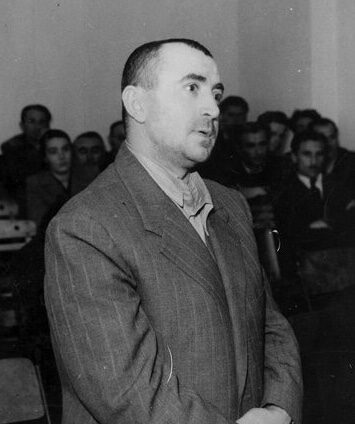
Koçi Xoxe was an Albanian politician. Born May 1, 1911, in Flampouro. Died June 11, 1949, in Tirana. Positions held include Member of the Parliament of Albania.
Facts
14 facts · 2 confirmed by two sources · 1 cited · 11 from one source
Where this comes from
Papalocal keeps its own record. It started from these sources; what each one said is kept here as it was copied, so a change on their side never changes this page by itself. Tap one to read its version.
What Wikidata says · copied November 17, 2026 · revision 2565927407
- Described as
- Albanian politician (1917–1949)
- Other names
- Koči Dzodze
- Born
- May 1, 1911 · 1 reference
- Died
- June 11, 1949 · 2 references
- Born in
- Flampouro
- Died in
- Tirana
- Cause of death
- hanging to death
- Citizen of
- Albania; Ottoman Empire (1911–1912) · 1 reference
- Occupation
- politician · 1 reference; military personnel
- Positions held
- Member of the Parliament of Albania
- Political party
- Party of Labour of Albania
- Religion
- atheism
- Military rank
- general; soldier
- Wikipedias with a page
- 26
Wikidata item Q531408 (wikidata.org/wiki/Q531408), public domain (CC0). Copied November 17, 2026.
What Wikipedia says · copied November 17, 2026 · revision 1383831667
Koçi Xoxe (pronounced [ˈkɔtʃi ˈdzɔdzɛ]; 1 May 1911 – 11 June 1949) was an Albanian politician who served as Deputy Prime Minister and Minister of the Interior of the People's Socialist Republic of Albania. He was supported by Yugoslav leader Josip Broz Tito during efforts to bring Albania into the Yugoslav federation. After Albania's leader, Enver Hoxha, established the country's independence with the support of the Soviet Union, Xoxe was arrested, tried on charges of treason, and executed.
- Born, in its opening lines
- May 1, 1911
- Died, in its opening lines
- June 11, 1949
From the Wikipedia article “Koçi Xoxe” (en.wikipedia.org/wiki/Koçi_Xoxe), by its contributors, under CC BY-SA 4.0 (creativecommons.org/licenses/by-sa/4.0/). Copied November 17, 2026; not changed.
Confirmed Two sources agree. Cited One source, and it names where it got it. One source One source, without a reference of its own. Sources disagree The sources disagree. We show the best-supported value and keep theirs below.
