
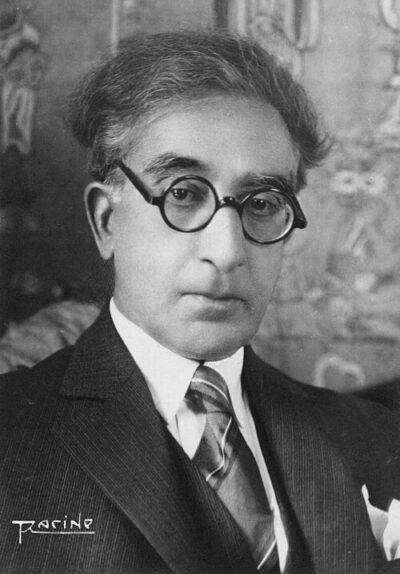
Konstantinos P. Cavafy
Konstantinos P. Cavafy was a Greek-Egyptian poet and journalist. Born April 29, 1863, in Alexandria. Died April 29, 1933, in Alexandria. Known for The Cavafy Publications 1891-1934.
Facts
17 facts · 2 confirmed by two sources · 7 cited · 8 from one source
Where this comes from
Papalocal keeps its own record. It started from these sources; what each one said is kept here as it was copied, so a change on their side never changes this page by itself. Tap one to read its version.
What Wikidata says · copied November 16, 2026 · revision 2570008836
- Described as
- Greek-Egyptian poet and journalist (1863–1933)
- Other names
- Constantine kavafy, C. P. Cavafis, Constantin Cavafy, K. P. Kavaphēs, K. P. Kavafis, C. P. Cavafy, Konstantine Kavafy, Constantinos Cavafis, Konstantino Kavafis, Constantino Kavafis, Konstantin Kavafis, Konstantinos Petrou Kavafis
- Born
- April 29, 1863 · 7 references
- Died
- April 29, 1933 · 10 references
- Born in
- Alexandria · 3 references
- Died in
- Alexandria · 3 references
- Buried in
- Cemetery of the Greek-Orthodox Egyptian Community · 1 reference
- Cause of death
- laryngeal cancer
- Citizen of
- Ottoman Empire; Egypt; Greece · 1 reference
- Occupation
- poet · 2 references; writer · 1 reference; civil servant; journalist
- Known for
- The Cavafy Publications 1891-1934
- Father
- Petros Ioannēs
- Mother
- Xaríkleia Fotiádi
- Lived in
- Alexandria · 1 reference
- Wikipedias with a page
- 72
Wikidata item Q216980 (wikidata.org/wiki/Q216980), public domain (CC0). Copied November 16, 2026.
What Wikipedia says · copied November 16, 2026 · revision 1371376643
Konstantinos Petrou Kavafis (Greek: Κωνσταντίνος Πέτρου Καβάφης [ka'vafis]; 29 April (OS 17 April), 1863 – 29 April 1933), known, especially in English, as Constantine P. Cavafy and often published as C. P. Cavafy (), was a Greek poet, journalist, and civil servant from Alexandria. A major figure of modern Greek literature, he is sometimes considered the most distinguished Greek poet of the 20th century. His works and consciously individual style earned him a place among the most important contributors not only to Greek poetry, but to Western poetry as a whole.
Cavafy's poetic canon consists of 154 poems, with dozens more that remained incomplete or in sketch form were not published until much later. He consistently refused to publish his work in books, preferring to share it through local newspapers and magazines, or even print it himself on broadsheets and give it away to anyone who might be interested. His most important poems were written after his fortieth birthday and published two years after his death.
Cavafy's work has been translated numerous times into many languages. His friend E. M. Forster, the novelist and literary critic, first introduced his poems to the English-speaking world in 1923; he referred to him as "The Poet", famously describing him as "a Greek gentleman in a straw hat, standing absolutely motionless at a slight angle to the universe". His work, as one translator put it, "holds the historical and the erotic in a single embrace".
- Born, in its opening lines
- 1863
- Died, in its opening lines
- April 29, 1933
From the Wikipedia article “Constantine P. Cavafy” (en.wikipedia.org/wiki/Constantine_P._Cavafy), by its contributors, under CC BY-SA 4.0 (creativecommons.org/licenses/by-sa/4.0/). Copied November 16, 2026; not changed.
Confirmed Two sources agree. Cited One source, and it names where it got it. One source One source, without a reference of its own. Sources disagree The sources disagree. We show the best-supported value and keep theirs below.
