
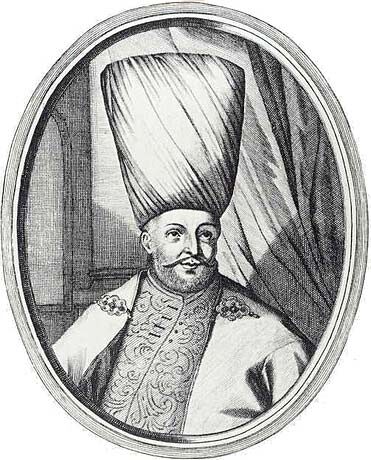
Köprülü Fazıl Ahmed Pasha
Köprülü Fazıl Ahmed Pasha was an Ottoman grand vizier. Born 1635, in Vezirköprü. Died November 3, 1676, in Edirne. Positions held include grand vizier of the Ottoman Empire (1661–1676) and Beylerbey of Damascus.
Facts
13 facts · 2 confirmed by two sources · 3 cited · 8 from one source
Where this comes from
Papalocal keeps its own record. It started from these sources; what each one said is kept here as it was copied, so a change on their side never changes this page by itself. Tap one to read its version.
What Wikidata says · copied November 16, 2026 · revision 2568360626
- Described as
- Ottoman grand vizier (1635-1676)
- Other names
- Köprülü Fazıl Ahmed Paşa
- Born
- 1635 · 4 references
- Died
- November 3, 1676 · 1 reference
- Born in
- Vezirköprü · 1 reference
- Died in
- Edirne
- Buried in
- Istanbul
- Citizen of
- Ottoman Empire · 1 reference
- Occupation
- politician; writer · 1 reference
- Positions held
- grand vizier of the Ottoman Empire (1661–1676); Beylerbey of Damascus
- Father
- Köprülü Mehmed Paşa
- Siblings
- Köprülüzâde Fâzıl Mustafa Pasha
- Religion
- Islam · 1 reference
- Wikipedias with a page
- 34
Wikidata item Q510679 (wikidata.org/wiki/Q510679), public domain (CC0). Copied November 16, 2026.
What Wikipedia says · copied November 16, 2026 · revision 1383684158
Köprülüzade Fazıl Ahmed Pasha (Ottoman Turkish: كپرولى زاده فاضل احمد پاشا, Turkish: Köprülü Fazıl Ahmet Paşa; Albanian: Fazlli Ahmed Pashë Kypriljoti; 1635 – 3 November 1676) was an Ottoman-Albanian nobleman and statesman, who belonged to the renowned Köprülü family of Albanian origin, which produced six grand viziers of the Ottoman Empire.
- Born, in its opening lines
- 1635
- Died, in its opening lines
- November 3, 1676
From the Wikipedia article “Köprülüzade Fazıl Ahmed Pasha” (en.wikipedia.org/wiki/Köprülüzade_Fazıl_Ahmed_Pasha), by its contributors, under CC BY-SA 4.0 (creativecommons.org/licenses/by-sa/4.0/). Copied November 16, 2026; not changed.
Confirmed Two sources agree. Cited One source, and it names where it got it. One source One source, without a reference of its own. Sources disagree The sources disagree. We show the best-supported value and keep theirs below.
