
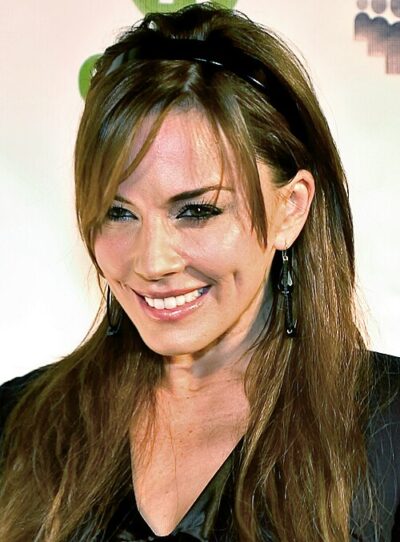
Krista Allen is an American actress. Born April 5, 1971, in Ventura. Educated at University of Texas at Austin.
Facts
10 facts · 1 confirmed by two sources · 1 cited · 8 from one source
Where this comes from
Papalocal keeps its own record. It started from these sources; what each one said is kept here as it was copied, so a change on their side never changes this page by itself. Tap one to read its version.
What Wikidata says · copied November 15, 2026 · revision 2556987176
- Described as
- American actress
- Other names
- Krista Allen-Moritt
- Born
- April 5, 1971
- Born in
- Ventura
- Citizen of
- United States
- Occupation
- actor · 1 reference; television actor; model; film actor; erotic photography model
- Education
- University of Texas at Austin
- Spouse
- Mams Taylor (2010–2012)
- Wikipedias with a page
- 31
Wikidata item Q240436 (wikidata.org/wiki/Q240436), public domain (CC0). Copied November 15, 2026.
What Wikipedia says · copied November 15, 2026 · revision 1384513746
Krista Allen (born April 5, 1971) is an American actress, comedian and model. Allen is known for playing soap opera roles, including Billie Reed on Days of Our Lives (1996–1999) and Taylor Hayes on The Bold and the Beautiful (2021–2023), earning a Daytime Emmy Award nomination for the latter and the erotic series Emmanuelle in Space (1994).
Allen held roles in the drama series Baywatch (2000–2001), and played herself in the HBO series Project Greenlight and Unscripted (both 2005). Her film appearances include the comedies Liar Liar (1997) and Anger Management (2003), the biographical spy feature Confessions of a Dangerous Mind (2002) and the supernatural horror The Final Destination (2009).
- Born, in its opening lines
- April 5, 1971
From the Wikipedia article “Krista Allen” (en.wikipedia.org/wiki/Krista_Allen), by its contributors, under CC BY-SA 4.0 (creativecommons.org/licenses/by-sa/4.0/). Copied November 15, 2026; not changed.
Confirmed Two sources agree. Cited One source, and it names where it got it. One source One source, without a reference of its own. Sources disagree The sources disagree. We show the best-supported value and keep theirs below.
