
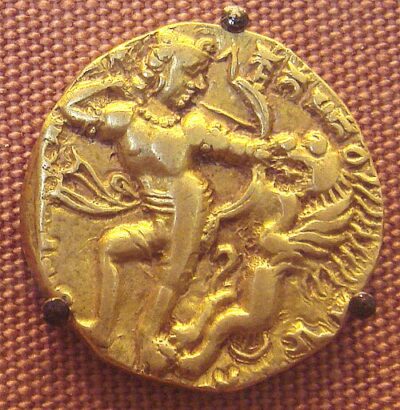
Kumaragupta I
Kumaragupta I was a Gupta Emperor. Born 399. Died 455. Positions held include Gupta emperor (415–455).
Facts
11 facts · 0 confirmed by two sources · 0 cited · 11 from one source
Where this comes from
Papalocal keeps its own record. It started from these sources; what each one said is kept here as it was copied, so a change on their side never changes this page by itself. Tap one to read its version.
What Wikidata says · copied November 16, 2026 · revision 2569133712
- Described as
- Gupta Emperor (399-455)
- Other names
- Kumaragupta, Mahendraditya
- Born
- 399
- Died
- 455
- Citizen of
- Gupta Empire
- Occupation
- politician
- Positions held
- Gupta emperor (415–455)
- Children
- Purugupta; Skandagupta
- Father
- Chandragupta II
- Mother
- Dhruvadevi
- Siblings
- Prabhavatigupta
- Religion
- Hinduism
- Wikipedias with a page
- 35
Wikidata item Q470715 (wikidata.org/wiki/Q470715), public domain (CC0). Copied November 16, 2026.
What Wikipedia says · copied November 16, 2026 · revision 1385956989
Kumaragupta I alias Mahendraditya was the Gupta emperor from c. 415 until his death in c. 455 CE. A son of the Gupta emperor Chandragupta II and Queen Dhruvadevi, he likely retained sovereignty over the inherited realm, which extended from what is present-day Gujarat in the west to present-day Bengal region in the east.
Kumaragupta performed an Ashvamedha sacrifice, which was usually performed to prove imperial sovereignty, although no concrete information is available about his military achievements. Based on the epigraphic and numismatic evidence, some modern historians have theorized that he may have subdued the Aulikaras of central India and the Traikutakas of western India. The Nalanda mahavihara was possibly built during his reign.
The Bhitari pillar inscription states that his successor Skandagupta restored the fallen fortunes of the Gupta family, which has led to suggestions that during his last years, Kumaragupta suffered reverses, possibly against the Pushyamitras or the Hunas. However, this cannot be said with certainty, and the situation described in the Bhitari inscription may have been the result of events that happened after his death.
From the Wikipedia article “Kumaragupta I” (en.wikipedia.org/wiki/Kumaragupta_I), by its contributors, under CC BY-SA 4.0 (creativecommons.org/licenses/by-sa/4.0/). Copied November 16, 2026; not changed.
Confirmed Two sources agree. Cited One source, and it names where it got it. One source One source, without a reference of its own. Sources disagree The sources disagree. We show the best-supported value and keep theirs below.
