
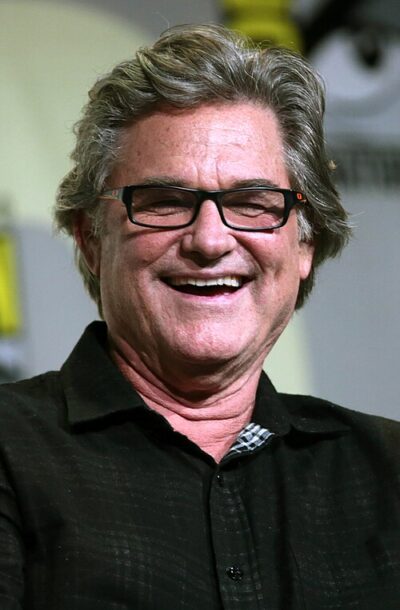
Kurt Russell
Kurt Russell is an American actor. Born March 17, 1951, in Springfield. Teams include Bend Rainbows. Educated at Thousand Oaks High School. Awards include Disney Legends, Sir and star on Hollywood Walk of Fame.
Facts
24 facts · 1 confirmed by two sources · 7 cited · 16 from one source
Where this comes from
Papalocal keeps its own record. It started from these sources; what each one said is kept here as it was copied, so a change on their side never changes this page by itself. Tap one to read its version.
What Wikidata says · copied November 13, 2026 · revision 2567254280
- Described as
- American actor (born 1951)
- Other names
- Kurt Vogel Russell
- Born
- March 17, 1951 · 8 references
- Born in
- Springfield · 1 reference
- Name at birth
- Kurt Vogel Russell
- Citizen of
- United States
- Occupation
- baseball player · 1 reference; film actor · 1 reference; television actor; film producer; screenwriter; actor · 1 reference; singer · 1 reference
- Education
- Thousand Oaks High School (1965–1969) · 1 reference
- Teams
- Bend Rainbows
- Sport
- baseball
- Genre
- Western film
- Awards
- Disney Legends (1998) · 1 reference; Sir; star on Hollywood Walk of Fame · 1 reference
- Spouse
- Season Hubley (1979–1983)
- Children
- Wyatt Russell; Boston Russell
- Father
- Bing Russell
- Mother
- Louise Julia Crone · 1 reference
- Height
- 1.76 m (5 ft 9 in)
- Wikipedias with a page
- 76
Wikidata item Q103157 (wikidata.org/wiki/Q103157), public domain (CC0). Copied November 13, 2026.
What Wikipedia says · copied November 13, 2026 · revision 1385194041
Kurt Vogel Russell (born March 17, 1951) is an American actor. He began his career as a child actor before transitioning to leading roles as an adult in various genres such as action adventures, science-fiction, westerns, romance films, comedic films, and family dramas. He is known for collaborating with filmmakers such as John Carpenter and Quentin Tarantino, and has received a Critics' Choice Super Award as well as various award nominations, including for a Primetime Emmy Award and a Golden Globe Award.
At the age of 12, he began acting in the Western TV series The Travels of Jaimie McPheeters (1963–1964). In the late 1960s, he signed a ten-year contract with Walt Disney Productions, starring in films such as The Computer Wore Tennis Shoes (1969), Now You See Him, Now You Don't (1972), and The Strongest Man in the World (1975). For his portrayal of rock and roll superstar Elvis Presley in the television film Elvis (1979), he was nominated for the Primetime Emmy Award for Outstanding Lead Actor in a Limited Series or Movie.
Russell was nominated for a Golden Globe Award for Best Supporting Actor – Motion Picture for his role in Mike Nichols's Silkwood (1983). He collaborated with director John Carpenter playing antiheroes in the action films Escape from New York (1981) and its sequel Escape from L.A. (1996), the horror film The Thing (1982), and the comedy action film Big Trouble in Little China (1986). Russell also acted in Used Cars (1980), The Fox and the Hound (1981), The Best of Times (1986), Overboard (1987), Backdraft (1991), Captain Ron (1992), Tombstone (1993), Stargate (1994), Vanilla Sky (2001), Miracle (2004), Dreamer, Sky High (both 2005), Death Proof (2007), The Hateful Eight (2015), Bone Tomahawk (2015), and Once Upon a Time in Hollywood (2019).
Russell has also acted in several franchises, portraying Mr. Nobody in three films of the Fast & Furious franchise from 2015 to 2021, Ego in the Marvel Cinematic Universe (MCU) installments Guardians of the Galaxy Vol. 2 (2017) and What If...? (2021), and Santa Claus in the Netflix films The Christmas Chronicles (2018) and The Christmas Chronicles 2 (2020).
- Born, in its opening lines
- March 17, 1951
From the Wikipedia article “Kurt Russell” (en.wikipedia.org/wiki/Kurt_Russell), by its contributors, under CC BY-SA 4.0 (creativecommons.org/licenses/by-sa/4.0/). Copied November 13, 2026; not changed.
Confirmed Two sources agree. Cited One source, and it names where it got it. One source One source, without a reference of its own. Sources disagree The sources disagree. We show the best-supported value and keep theirs below.
