
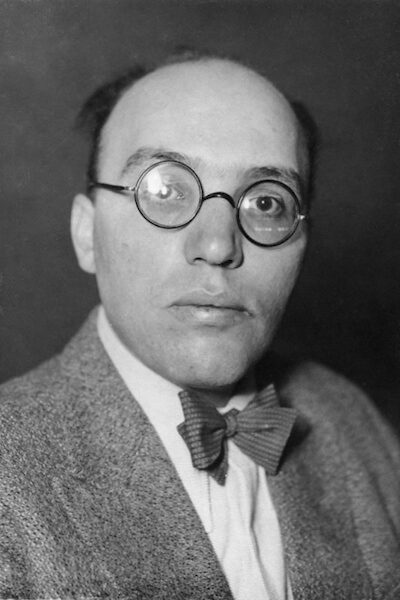
Kurt Weill
Kurt Weill was a German composer. Born March 2, 1900, in Dessau. Died April 3, 1950, in New York City. Known for The Threepenny Opera, Rise and Fall of the City of Mahagonny and The Seven Deadly Sins. Educated at Berlin University of the Arts. Awards include Tony Award for Best Original Score, Drama Desk Award for Outstanding Music and National Medal of Science.
Facts
33 facts · 2 confirmed by two sources · 8 cited · 23 from one source
Where this comes from
Papalocal keeps its own record. It started from these sources; what each one said is kept here as it was copied, so a change on their side never changes this page by itself. Tap one to read its version.
What Wikidata says · copied November 13, 2026 · revision 2568923301
- Described as
- German composer (1900–1950)
- Other names
- Kurt Julian Weill
- Born
- March 2, 1900 · 14 references
- Died
- April 3, 1950 · 15 references
- Born in
- Dessau · 3 references
- Died in
- New York City · 5 references
- Buried in
- Mount Repose Cemetery · 1 reference
- Cause of death
- myocardial infarction
- Name at birth
- Kurt Julian Weill
- Citizen of
- Germany; United States · 2 references
- Occupation
- composer · 2 references; pedagogue; film score composer · 1 reference; chapelmaster · 1 reference; musician · 1 reference
- Education
- Berlin University of the Arts
- Genre
- opera; symphony; ballet
- Instrument
- piano
- Known for
- The Threepenny Opera; Rise and Fall of the City of Mahagonny; The Seven Deadly Sins; Street Scene; Der Silbersee
- Awards
- Tony Award for Best Original Score (1947) · 1 reference; Drama Desk Award for Outstanding Music (1970); National Medal of Science
- Spouse
- Lotte Lenya (2 times) (1926–1950)
- Father
- Albert Weill
- Religion
- Judaism
- Lived in
- Kleinmachnow (1932–1933); Dessau
- Website
- http://www.kwf.org/
- Wikipedias with a page
- 50
Wikidata item Q55004 (wikidata.org/wiki/Q55004), public domain (CC0). Copied November 13, 2026.
What Wikipedia says · copied November 13, 2026 · revision 1385548682
Kurt Julian Weill (; German: [vaɪl]; March 2, 1900 – April 3, 1950) was a German-born American composer active from the 1920s in his native country, and in his later years in the United States. He was a leading composer for the stage who was best known for his fruitful collaborations with Bertolt Brecht. With Brecht, he wrote his best-known work, The Threepenny Opera, which includes the ballad "Mack the Knife". Weill held the ideal of writing music that served a socially useful purpose, Gebrauchsmusik. He also wrote several works for the concert hall and a number of works on Jewish themes. He fled Nazi Germany in 1933, arriving in the United States two years later. Settling in New York, he made a substantial contribution to American musical theater through works such as Lady in the Dark and Street Scene.
- Born, in its opening lines
- March 2, 1900
- Died, in its opening lines
- April 3, 1950
From the Wikipedia article “Kurt Weill” (en.wikipedia.org/wiki/Kurt_Weill), by its contributors, under CC BY-SA 4.0 (creativecommons.org/licenses/by-sa/4.0/). Copied November 13, 2026; not changed.
Confirmed Two sources agree. Cited One source, and it names where it got it. One source One source, without a reference of its own. Sources disagree The sources disagree. We show the best-supported value and keep theirs below.
