
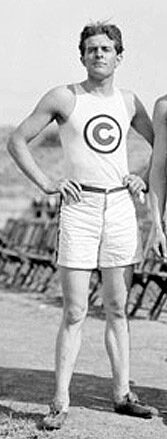
Lacey Hearn
Lacey Hearn was an American Olympic runner. Born March 23, 1881, in Portland. Died October 19, 1969, in Fort Wayne. Educated at Purdue University.
Facts
8 facts · 2 confirmed by two sources · 0 cited · 6 from one source
What’s different
- Died: we show October 19, 1969 (Confirmed). Wikidata also lists October 18, 1969
Where this comes from
Papalocal keeps its own record. It started from these sources; what each one said is kept here as it was copied, so a change on their side never changes this page by itself. Tap one to read its version.
What Wikidata says · copied November 18, 2026 · revision 2568545794
- Described as
- American Olympic runner (1881–1969)
- Other names
- Lacey Earnest Hearn
- Born
- March 23, 1881
- Died
- October 19, 1969; October 18, 1969 · 1 reference
- Born in
- Portland
- Died in
- Fort Wayne
- Citizen of
- United States
- Occupation
- athletics competitor
- Education
- Purdue University · 1 reference
- Sport
- athletics
- Wikipedias with a page
- 16
Wikidata item Q517968 (wikidata.org/wiki/Q517968), public domain (CC0). Copied November 18, 2026.
What Wikipedia says · copied November 18, 2026 · revision 1380939459
Lacey Earnest Hearn (March 23, 1881 – October 19, 1969 in Fort Wayne, Indiana) was an American athlete and middle-distance runner who competed in the early twentieth century. Individually he specialized in the 1500 Metres, and he won a bronze medal in Athletics at the 1904 Summer Olympics, held in St. Louis, Missouri, United States. Hearn's Compatriot James Lightbody took gold. Hearn was also a member of the American distance team which won the silver medal at the 1904 Olympics, competing in the Chicago American team in the 4-mile team race, consisting of James Lightbody, Frank Verner, Hearn, Albert Corey and Sidney Hatch.
- Born, in its opening lines
- March 23, 1881
- Died, in its opening lines
- October 19, 1969
From the Wikipedia article “Lacey Hearn” (en.wikipedia.org/wiki/Lacey_Hearn), by its contributors, under CC BY-SA 4.0 (creativecommons.org/licenses/by-sa/4.0/). Copied November 18, 2026; not changed.
Confirmed Two sources agree. Cited One source, and it names where it got it. One source One source, without a reference of its own. Sources disagree The sources disagree. We show the best-supported value and keep theirs below.
