
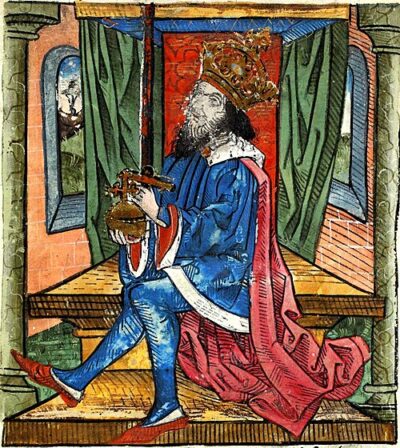
Ladislaus IV of Hungary
Ladislaus IV of Hungary was a King of Hungary. Born August 5, 1262. Died July 10, 1290, in Körösszegapáti. Positions held include Apostolic King of Hungary (1272–1290).
Facts
15 facts · 2 confirmed by two sources · 0 cited · 13 from one source
Where this comes from
Papalocal keeps its own record. It started from these sources; what each one said is kept here as it was copied, so a change on their side never changes this page by itself. Tap one to read its version.
What Wikidata says · copied November 16, 2026 · revision 2553921423
- Described as
- King of Hungary (1262-1290)
- Other names
- Ladislaus IV
- Born
- August 5, 1262
- Died
- July 10, 1290
- Died in
- Körösszegapáti
- Citizen of
- Hungary
- Occupation
- politician; monarch
- Positions held
- Apostolic King of Hungary (1272–1290)
- Political party
- politician before the emergence of political parties
- Spouse
- Elizabeth of Sicily (1270–1290) · 1 reference
- Father
- Stephen V of Hungary
- Mother
- Elizabeth the Cuman
- Siblings
- Anna of Hungary; Mary of Hungary; Elizabeth of Hungary, Queen of Serbia; Catherine of Hungary, Queen of Serbia
- Wikipedias with a page
- 39
Wikidata item Q156147 (wikidata.org/wiki/Q156147), public domain (CC0). Copied November 16, 2026.
What Wikipedia says · copied November 16, 2026 · revision 1374673258
Ladislaus IV of Hungary (Hungarian: IV. (Kun) László, Croatian: Ladislav IV. (Kumanac), Slovak: Ladislav IV. (Kumánsky); 5 August 1262 – 10 July 1290), also known as Ladislaus the Cuman, was King of Hungary and Croatia from 1272 to 1290. His mother, Elizabeth, was the daughter of a chieftain from the pagan Cumans who had settled in Hungary. At the age of seven, he married Elisabeth, a daughter of King Charles I of Sicily. Ladislaus was only 9 when a rebellious lord, Joachim Gutkeled, kidnapped and imprisoned him.
Ladislaus was still a prisoner when his father Stephen V of Hungary died on 6 August 1272. During his minority, many groupings of barons – primarily the Abas, Csáks, Kőszegis, and Gutkeleds – fought against each other for supreme power. Ladislaus was declared to be of age at an assembly of the prelates, barons, noblemen, and Cumans in 1277. He allied himself with Rudolf I of Germany against Ottokar II of Bohemia. His forces had a preeminent role in Rudolf's victory over Ottokar in the Battle on the Marchfeld on 26 August 1278.
However, Ladislaus could not restore royal power in Hungary. A papal legate, Philip, bishop of Fermo, came to Hungary to help Ladislaus consolidate his authority, but the prelate was shocked at the presence of thousands of pagan Cumans in Hungary. Ladislaus promised that he would force them to adopt a Christian lifestyle, but they refused to obey the legate's demands. Ladislaus decided to support the Cumans, for which Philip of Fermo excommunicated him. The Cumans imprisoned the legate, and the legate's partisans captured Ladislaus. In early 1280, Ladislaus agreed to persuade the Cumans to submit to the legate, but many Cumans preferred to leave Hungary.
Ladislaus vanquished a Cuman army that invaded Hungary in 1282. Hungary also survived a Mongol invasion in 1285. Ladislaus had, by that time, become so unpopular that many of his subjects accused him of inciting the Mongols to invade Hungary. After he imprisoned his wife in 1286, he lived with his Cuman mistresses. During the last years of his life, he wandered throughout the country with his Cuman allies, but he was unable to control the most powerful lords and bishops any more. Pope Nicholas IV planned to declare a crusade against him, but three Cuman assassins murdered Ladislaus.
- Born, in its opening lines
- August 5, 1262
- Died, in its opening lines
- July 10, 1290
From the Wikipedia article “Ladislaus IV of Hungary” (en.wikipedia.org/wiki/Ladislaus_IV_of_Hungary), by its contributors, under CC BY-SA 4.0 (creativecommons.org/licenses/by-sa/4.0/). Copied November 16, 2026; not changed.
Confirmed Two sources agree. Cited One source, and it names where it got it. One source One source, without a reference of its own. Sources disagree The sources disagree. We show the best-supported value and keep theirs below.
