
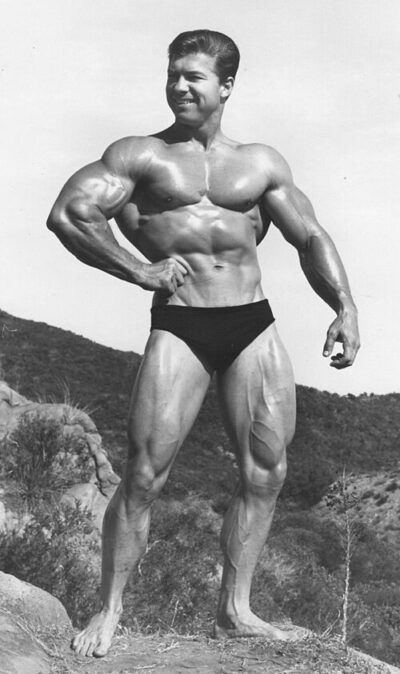
Larry Scott
Larry Scott was an American bodybuilder. Born October 12, 1938, in Blackfoot. Died March 8, 2014, in Salt Lake City.
Facts
11 facts · 2 confirmed by two sources · 0 cited · 9 from one source
Where this comes from
Papalocal keeps its own record. It started from these sources; what each one said is kept here as it was copied, so a change on their side never changes this page by itself. Tap one to read its version.
What Wikidata says · copied November 16, 2026 · revision 2515777488
- Described as
- American bodybuilder (1938–2014)
- Born
- October 12, 1938 · 1 reference
- Died
- March 8, 2014 · 1 reference
- Born in
- Blackfoot
- Died in
- Salt Lake City
- Cause of death
- Alzheimer's disease
- Citizen of
- United States
- Occupation
- bodybuilder
- Sport
- bodybuilding
- Nickname
- The Legend · 1 reference
- Height
- 1.72 m (5 ft 8 in) · 1 reference
- Website
- http://larryscott.com/
- Wikipedias with a page
- 23
Wikidata item Q721877 (wikidata.org/wiki/Q721877), public domain (CC0). Copied November 16, 2026.
What Wikipedia says · copied November 16, 2026 · revision 1382776238
Larry Dee Scott (October 12, 1938 – March 8, 2014), nicknamed "the Legend" and "the Golden Boy," was an American IFBB professional bodybuilder. He won the inaugural 1965 Mr. Olympia competition and defended the crown at the 1966 Mr. Olympia contest before retiring. He also won the Mr. America title in 1962 and the Mr. Universe title in 1964. With his Olympia victory in 1965, Scott became the first man to win the three major titles of his era. A student of Vince Gironda, he became best known for his arm development, particularly his impressive and unusually long biceps. He was inducted into the IFBB Hall of Fame in 1999.
- Born, in its opening lines
- October 12, 1938
- Died, in its opening lines
- March 8, 2014
From the Wikipedia article “Larry Scott (bodybuilder)” (en.wikipedia.org/wiki/Larry_Scott_(bodybuilder)), by its contributors, under CC BY-SA 4.0 (creativecommons.org/licenses/by-sa/4.0/). Copied November 16, 2026; not changed.
Confirmed Two sources agree. Cited One source, and it names where it got it. One source One source, without a reference of its own. Sources disagree The sources disagree. We show the best-supported value and keep theirs below.
