
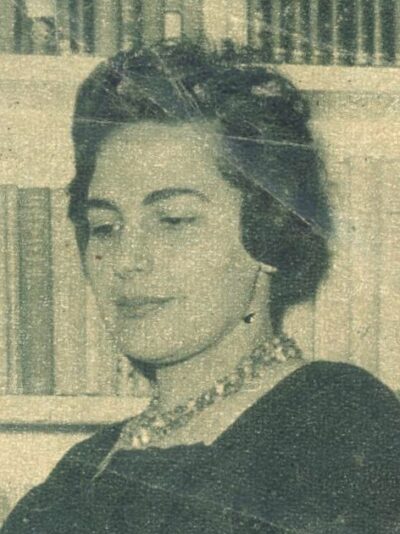
Latifa al-Zayyat
Latifa al-Zayyat was an Egyptian activist and writer. Born August 8, 1923, in Damietta. Died September 10, 1996, in Cairo. Educated at Cairo University. Awards include Naguib Mahfouz Medal for Literature.
Facts
15 facts · 2 confirmed by two sources · 6 cited · 7 from one source
What’s different
- Died: we show September 10, 1996 (Confirmed). Wikidata also lists September 11, 1996
Where this comes from
Papalocal keeps its own record. It started from these sources; what each one said is kept here as it was copied, so a change on their side never changes this page by itself. Tap one to read its version.
What Wikidata says · copied November 18, 2026 · revision 2553945395
- Described as
- Egyptian activist and writer (1923–1996)
- Born
- August 8, 1923 · 2 references
- Died
- September 11, 1996 · 1 reference; September 10, 1996
- Born in
- Damietta · 1 reference
- Died in
- Cairo · 1 reference
- Cause of death
- cancer
- Citizen of
- Egypt
- Occupation
- translator; university teacher; writer · 2 references; novelist; activist · 1 reference; literary scholar · 1 reference
- Worked for
- Ain Shams University
- Education
- Cairo University
- Awards
- Naguib Mahfouz Medal for Literature (1996) · 1 reference
- Wikipedias with a page
- 23
Wikidata item Q542257 (wikidata.org/wiki/Q542257), public domain (CC0). Copied November 18, 2026.
What Wikipedia says · copied November 18, 2026 · revision 1375811995
Latifa al-Zayyat (Arabic: لطيفة الزيات, romanized: Laṭīfah al-Zayyāt; 8 August 1923 – 10 September 1996) was an Egyptian activist and writer, most famous for her novel The Open Door, which won the inaugural Naguib Mahfouz Medal for Literature.
- Born, in its opening lines
- August 8, 1923
- Died, in its opening lines
- September 10, 1996
From the Wikipedia article “Latifa al-Zayyat” (en.wikipedia.org/wiki/Latifa_al-Zayyat), by its contributors, under CC BY-SA 4.0 (creativecommons.org/licenses/by-sa/4.0/). Copied November 18, 2026; not changed.
Confirmed Two sources agree. Cited One source, and it names where it got it. One source One source, without a reference of its own. Sources disagree The sources disagree. We show the best-supported value and keep theirs below.
