
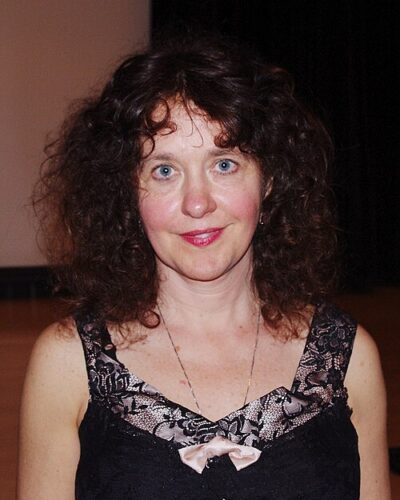
Laura Kasischke is an American writer. Born December 5, 1961, in Grand Rapids. Educated at University of Michigan and Columbia University. Awards include Guggenheim Fellowship, National Endowment for the Arts Fellowship and Beatrice Hawley Award.
Facts
19 facts · 0 confirmed by two sources · 10 cited · 9 from one source
Where this comes from
Papalocal keeps its own record. It started from these sources; what each one said is kept here as it was copied, so a change on their side never changes this page by itself. Tap one to read its version.
What Wikidata says · copied November 21, 2026 · revision 2563134468
- Described as
- American writer
- Born
- December 5, 1961 · 2 references
- Born in
- Grand Rapids · 1 reference
- Citizen of
- United States
- Occupation
- novelist; screenwriter; poet · 1 reference; writer
- Worked for
- University of Michigan · 1 reference
- Education
- University of Michigan; Columbia University; East Grand Rapids High School · 1 reference
- Awards
- Guggenheim Fellowship (2009) · 1 reference; National Endowment for the Arts Fellowship; Beatrice Hawley Award (1998) · 1 reference; Juniper Prize for Poetry (2001) · 1 reference; National Book Critics Circle Award for Poetry (2011) · 1 reference; Michigan Author Award (2013) · 1 reference; Michigan Notable Books (2011) · 1 reference
- Website
- https://www.laurakasischkewriter.com/
- Wikipedias with a page
- 7
Wikidata item Q3218695 (wikidata.org/wiki/Q3218695), public domain (CC0). Copied November 21, 2026.
What Wikipedia says · copied November 21, 2026 · revision 1371729297
Laura Kasischke is an American fiction writer and poet. She is best known for writing the novels Suspicious River, The Life Before Her Eyes and White Bird in a Blizzard, all of which have been adapted to film.
From the Wikipedia article “Laura Kasischke” (en.wikipedia.org/wiki/Laura_Kasischke), by its contributors, under CC BY-SA 4.0 (creativecommons.org/licenses/by-sa/4.0/). Copied November 21, 2026; not changed.
Confirmed Two sources agree. Cited One source, and it names where it got it. One source One source, without a reference of its own. Sources disagree The sources disagree. We show the best-supported value and keep theirs below.
