
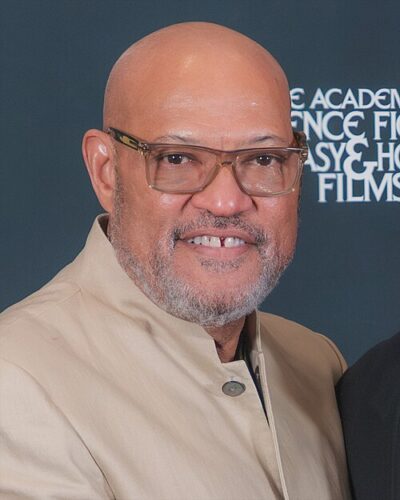
Laurence Fishburne
Laurence Fishburne is an American actor. Born July 30, 1961, in Augusta. Positions held include UNICEF Goodwill Ambassador. Known for The Matrix and John Wick. Educated at Hollywood High School and Talent Unlimited High School. Awards include Theatre World Award, Tony Award for Best Featured Actor in a Play and Saturn Awards.
Facts
33 facts · 1 confirmed by two sources · 3 cited · 29 from one source
Where this comes from
Papalocal keeps its own record. It started from these sources; what each one said is kept here as it was copied, so a change on their side never changes this page by itself. Tap one to read its version.
What Wikidata says · copied November 13, 2026 · revision 2568345281
- Described as
- American actor
- Other names
- Larry Fishburne, Laurence John Fishburne III
- Born
- July 30, 1961 · 6 references
- Born in
- Augusta
- Name at birth
- Laurence John Fishburne III
- Citizen of
- United States
- Occupation
- film actor · 1 reference; television actor; film director; film producer; playwright; voice actor; stage actor; screenwriter
- Positions held
- UNICEF Goodwill Ambassador
- Education
- Hollywood High School · 1 reference; Talent Unlimited High School · 1 reference
- Member of
- American Academy of Arts and Sciences
- Known for
- The Matrix; John Wick
- Awards
- Theatre World Award (1992) · 1 reference; Tony Award for Best Featured Actor in a Play (1992); Saturn Awards; Primetime Emmy Award for Outstanding Guest Actor in a Drama Series (1993); Primetime Emmy Award for Outstanding Actor in a Short Form Comedy or Drama Series (2020); Primetime Emmy Award for Outstanding Television Movie (1997); MTV Movie Award for Best Fight (2000); NAACP Image Award for Outstanding Supporting Actor in a Motion Picture (1995); Audie Award for Best Male Narrator; Tony Awards (1992) · 1 reference; Emmy Award (1993) · 1 reference
- Spouse
- Gina Torres (2002–2018); Hajna O. Moss (1985–)
- Children
- Montana Fishburne · 1 reference
- Lived in
- Hollywood
- Wikipedias with a page
- 76
Wikidata item Q193048 (wikidata.org/wiki/Q193048), public domain (CC0). Copied November 13, 2026.
What Wikipedia says · copied November 13, 2026 · revision 1384372244
Laurence John Fishburne III (born July 30, 1961) is an American actor. Throughout his career, he has gained recognition for his roles on stage and screen as militant and authoritative characters. Fishburne first came to prominence appearing in Apocalypse Now (1979) and achieved further recognition for his supporting role in Boyz n the Hood (1991). Later, he became known for portraying Morpheus in The Matrix trilogy (1999–2003) and the Bowery King in the John Wick film series (2017–).
For his portrayal of Ike Turner in What's Love Got to Do with It (1993), Fishburne was nominated for an Academy Award for Best Actor. He has also won six Emmy Awards for various television projects, and a Tony Award for Best Featured Actor in a Play for his performance in Two Trains Running (1992). He has also received nominations for a Golden Globe Award and five Screen Actors Guild Awards.
Other notable film credits include The Color Purple (1985), A Nightmare on Elm Street 3: Dream Warriors (1987), School Daze (1988), King of New York (1990), Deep Cover (1992), Searching for Bobby Fischer (1993), Higher Learning (1995), Event Horizon (1997), Mystic River (2003), Akeelah and the Bee (2006), Mission: Impossible III (2006), Predators (2010), Contagion (2011), Man of Steel (2013), Batman v Superman: Dawn of Justice (2016), Ant-Man and the Wasp (2018), and The Mule (2018). On television, he had a recurring role as Cowboy Curtis in Pee-wee's Playhouse (1986–1990), starred in the CBS crime drama CSI: Crime Scene Investigation (2008–2011), portrayed Jack Crawford in the NBC thriller series Hannibal (2013–2015), and played Earl "Pops" Johnson in the ABC sitcom Black-ish (2014–2022).
- Born, in its opening lines
- July 30, 1961
From the Wikipedia article “Laurence Fishburne” (en.wikipedia.org/wiki/Laurence_Fishburne), by its contributors, under CC BY-SA 4.0 (creativecommons.org/licenses/by-sa/4.0/). Copied November 13, 2026; not changed.
Confirmed Two sources agree. Cited One source, and it names where it got it. One source One source, without a reference of its own. Sources disagree The sources disagree. We show the best-supported value and keep theirs below.
