
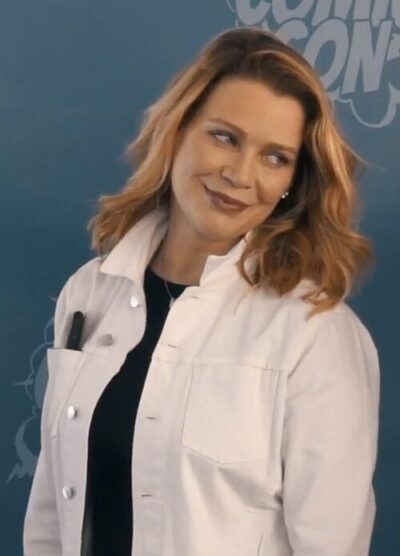
Laurie Holden
Laurie Holden is an American-Canadian actress. Born December 17, 1969, in Los Angeles. Educated at McGill University and Columbia University.
Facts
18 facts · 1 confirmed by two sources · 0 cited · 17 from one source
Where this comes from
Papalocal keeps its own record. It started from these sources; what each one said is kept here as it was copied, so a change on their side never changes this page by itself. Tap one to read its version.
What Wikipedia says · copied November 13, 2026 · revision 1377819886
Heather Laurie Holden (born December 17, 1969) is an American-Canadian actress, producer, model, and human rights activist. She is best known for portraying Marita Covarrubias in The X-Files (1996–2002) and Andrea in AMC's The Walking Dead (2010–2013). She has also had recurring roles in acclaimed television series such as The Shield (2008), The Americans (2017–2018), and The Boys (2022).
In film, she played Cybil Bennett in Silent Hill (2006) and Amanda Dumfries in The Mist (2007).
- Born, in its opening lines
- December 17, 1969
From the Wikipedia article “Laurie Holden” (en.wikipedia.org/wiki/Laurie_Holden), by its contributors, under CC BY-SA 4.0 (creativecommons.org/licenses/by-sa/4.0/). Copied November 13, 2026; not changed.
What Wikidata says · copied November 14, 2026 · revision 2569161375
- Described as
- American-Canadian actress
- Other names
- Heather Laurie Holden
- Born
- December 17, 1969
- Born in
- Los Angeles
- Name at birth
- Heather Laurie Holden
- Citizen of
- Canada; United States
- Occupation
- television actor; film actor; film producer; human rights defender; stage actor; voice actor
- Education
- McGill University; Columbia University; UCLA School of Theater, Film and Television; University of California, Los Angeles · 1 reference
- Father
- Glen Corbett
- Mother
- Adrienne Ellis
- Siblings
- Christopher Holden
- Wikipedias with a page
- 56
Wikidata item Q18947 (wikidata.org/wiki/Q18947), public domain (CC0). Copied November 14, 2026.
Confirmed Two sources agree. Cited One source, and it names where it got it. One source One source, without a reference of its own. Sources disagree The sources disagree. We show the best-supported value and keep theirs below.
