
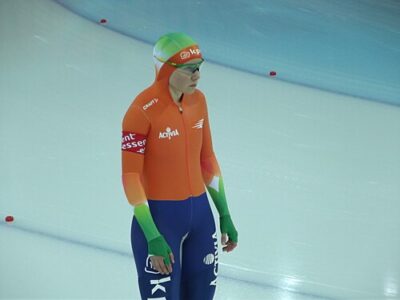
Laurine van Riessen
Laurine van Riessen is a Dutch speed skater and track cyclist. Born August 10, 1987, in Leiden. Educated at Stedelijk Gymnasium Leiden.
Facts
11 facts · 1 confirmed by two sources · 1 cited · 9 from one source
Where this comes from
Papalocal keeps its own record. It started from these sources; what each one said is kept here as it was copied, so a change on their side never changes this page by itself. Tap one to read its version.
What Wikidata says · copied November 18, 2026 · revision 2552602033
- Described as
- Dutch speed skater and track cyclist
- Born
- August 10, 1987
- Born in
- Leiden
- Citizen of
- Kingdom of the Netherlands
- Occupation
- speed skater; track cyclist; sport cyclist
- Education
- Stedelijk Gymnasium Leiden
- Sport
- speed skating · 2 references; track cycling
- Height
- 1.68 m (5 ft 6 in) · 1 reference
- Website
- http://www.laurinevanriessen.nl/
- Wikipedias with a page
- 23
Wikidata item Q264170 (wikidata.org/wiki/Q264170), public domain (CC0). Copied November 18, 2026.
What Wikipedia says · copied November 18, 2026 · revision 1380413248
Laurine van Riessen (born 10 August 1987) is a Dutch long track speed skater and track cyclist, who currently rides for UCI Track Team BEAT CC p/b Saxo. She competed for the Netherlands at the 2010 Winter Olympics in Vancouver in the 500, 1000, and 1500 metres and won the bronze medal in the 1000 metres. In 2015, she switched to track cycling and won a bronze medal in the team sprint at the 2015 UEC European Track Championships in Grenchen, Switzerland.
Van Riessen competed for the Netherlands in track cycling at the 2016 Summer Olympics in Rio de Janeiro, Brazil. In 2017, she rode for the British team Matrix Pro Cycling. On 4 September 2018 she joined BEAT Cycling Club.
- Born, in its opening lines
- August 10, 1987
From the Wikipedia article “Laurine van Riessen” (en.wikipedia.org/wiki/Laurine_van_Riessen), by its contributors, under CC BY-SA 4.0 (creativecommons.org/licenses/by-sa/4.0/). Copied November 18, 2026; not changed.
Confirmed Two sources agree. Cited One source, and it names where it got it. One source One source, without a reference of its own. Sources disagree The sources disagree. We show the best-supported value and keep theirs below.
