
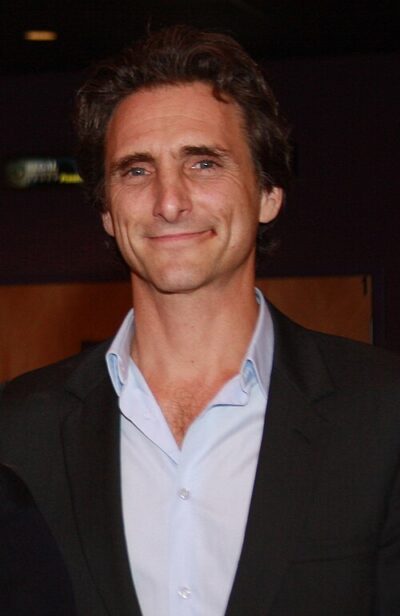
Lawrence Bender
Lawrence Bender is an American film producer. Born October 17, 1957, in The Bronx. Educated at University of Maine and Cherry Hill High School East.
Facts
13 facts · 1 confirmed by two sources · 3 cited · 9 from one source
Where this comes from
Papalocal keeps its own record. It started from these sources; what each one said is kept here as it was copied, so a change on their side never changes this page by itself. Tap one to read its version.
What Wikidata says · copied November 15, 2026 · revision 2567695285
- Described as
- American film producer
- Born
- October 17, 1957 · 2 references
- Born in
- The Bronx · 1 reference
- Citizen of
- United States
- Occupation
- film producer · 1 reference; blogger; entrepreneur; actor; screenwriter; executive producer; producer · 1 reference
- Education
- University of Maine; Cherry Hill High School East · 1 reference
- Children
- Misha Bender
- Wikipedias with a page
- 26
Wikidata item Q514913 (wikidata.org/wiki/Q514913), public domain (CC0). Copied November 15, 2026.
What Wikipedia says · copied November 15, 2026 · revision 1382265244
Lawrence Bender (born October 17, 1957) is an American film producer. Throughout his career, Bender-produced films have received 36 Academy Award nominations, resulting in eight wins.
Bender rose to fame by producing Reservoir Dogs in 1992 and has since produced several of Quentin Tarantino's films, including Pulp Fiction, Jackie Brown, Kill Bill: Volume 1 & 2 and Inglourious Basterds. Bender has also produced three documentary films, most notably An Inconvenient Truth (2006), which won the Academy Award for Best Documentary Feature. He has received three Best Picture nominations for producing Pulp Fiction, Good Will Hunting, and Inglourious Basterds.
- Born, in its opening lines
- October 17, 1957
From the Wikipedia article “Lawrence Bender” (en.wikipedia.org/wiki/Lawrence_Bender), by its contributors, under CC BY-SA 4.0 (creativecommons.org/licenses/by-sa/4.0/). Copied November 15, 2026; not changed.
Confirmed Two sources agree. Cited One source, and it names where it got it. One source One source, without a reference of its own. Sources disagree The sources disagree. We show the best-supported value and keep theirs below.
